Take a look at our
Upcoming Events
With Inclusive Change
We host events in our local community in partnership with Inclusive Change At Work CIC. Take a look at the list below to find out whats on.
Our online events are designed to inform and educate. We have a range of free and on demand events online.
Our team are experienced speakers and can be booked to educate and entertain at your next event - get in touch to find out how we can help.
Important Dates in our Calendar

April 2026
All Month - World Autism Acceptance Month, Online and in-person events globally
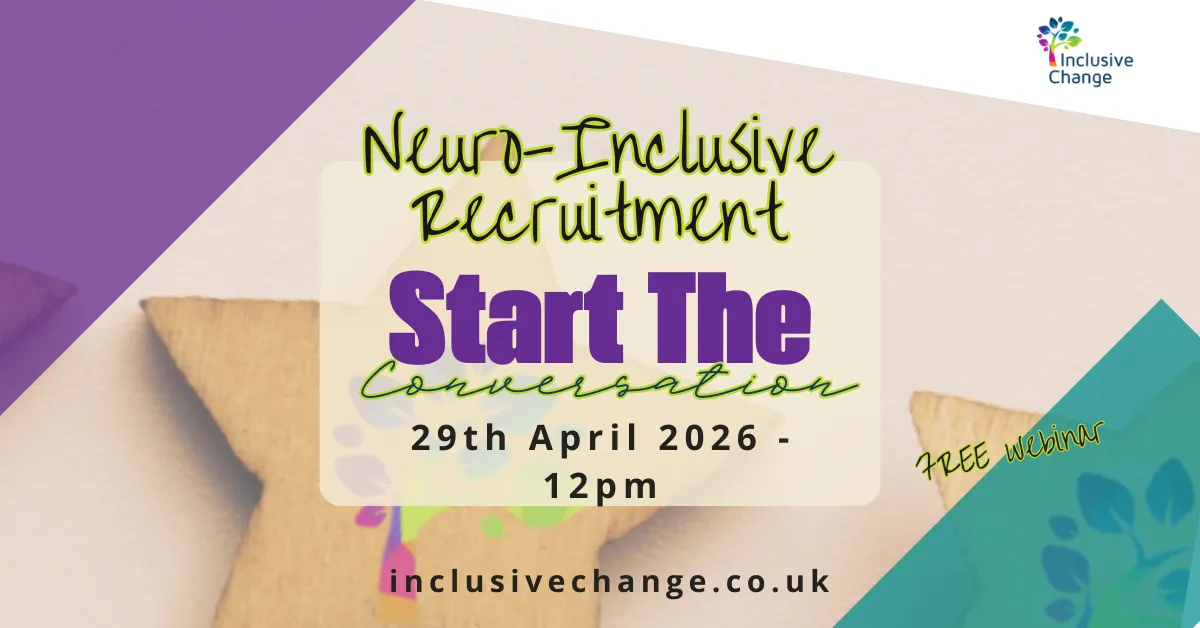
29th - Start the Conversation - FREE Webinar Neuro-Inclusive Recruitment, Online
May 2026
11th-17th - Mental Health Awareness Week, Online
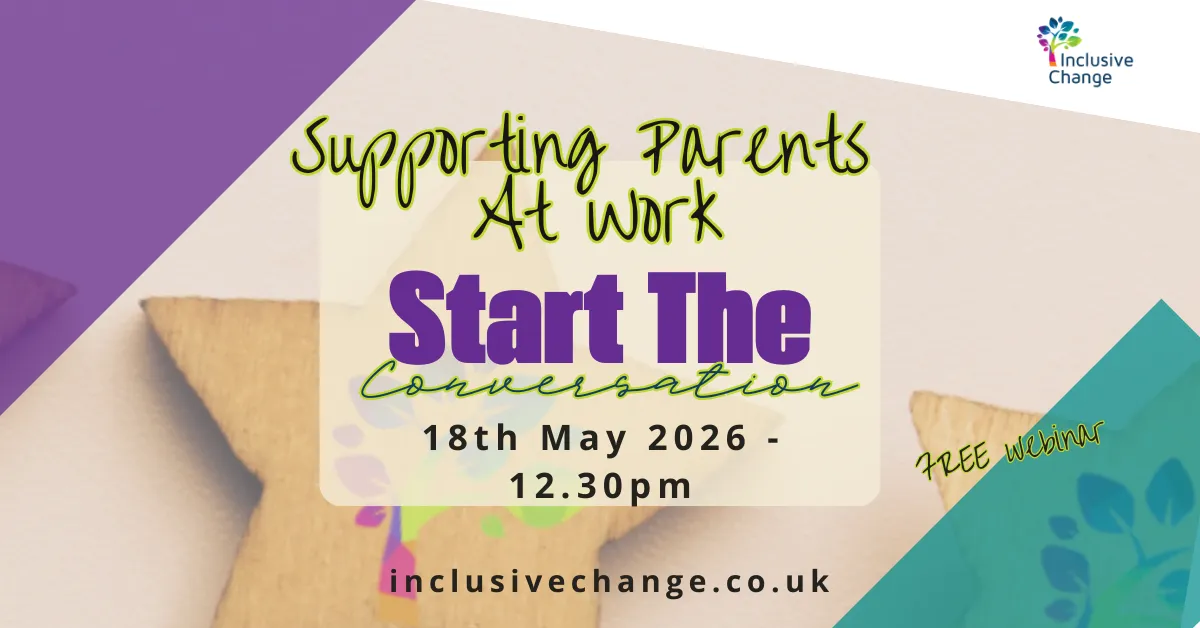
18th - Start the Conversation - FREE Webinar for Managers Supporting Parents of Neurodivergent Children at Work , Online
Start the Conversation Lunch & Learn Series:
FREE Webinars on Neurodiversity at Work
Shape the future of your organisation with practical insights, real examples, and strategies you can put into action straight away. Join our free lunchtime webinars and get a small taste of what we are about.
Our next Lunch & Learn is on 29th April and will be looking at Recruitment and Neurodiversity.
Start the Conversation Lunch & Learn Series:
FREE Webinars on Neurodiversity at Work
Many employees are balancing work alongside the demands of supporting a neurodivergent child, including school attendance challenges, anxiety, and overwhelm.
This FREE Lunch & Learn webinar on 18th May, for managers and HR/People teams, explores how organisations can better support working parents through practical, realistic approaches that improve wellbeing, retention and performance.
Re-Visit our Past Events
BSides Bristol - 5th & 6th September
Lucy Smith joined day one of BSides Bristol as she explored the future of work – spotting red flags, recognising reasonable requests, and reframing adjustments as smart strategies for building high-performing, future-ready cyber teams.
Click on the button below to access Lucy's top ten tips for inclusive recruitment.
Inclusive Change at Work - In the Community
From January to March 2025, our sister community interest company, Inclusive Change at Work CIC, hosted transformative workshops to promote understanding and inclusion for neurodivergent individuals and their families.
We gathered at Emersons Green Village Hall for expert-led sessions that offered practical strategies and a welcoming space for learning and growth.
Visit our recap page for more information about the sessions plus useful links and articles.

Building the Future of Work, Together
Throughout 2024 and early 2025, we hosted a series of live webinars and in-person workshops focused on supporting neurodiverse and disabled young people in the workplace. These sessions helped businesses understand the value of neurodivergent talent, while also offering guidance to parents and carers on career opportunities and support for their young adults.
You can catch up on everything via our recap pages - watch the recordings, explore helpful articles, and grab some free resources too.
Our Event Blog - Where we've been, what we've learned
Sharing our experiences, insights, and standout moments from industry events
Layers, Not Labels, Inclusive Training Practices
Layers, Not Labels, What the 2026 Social Study Reveals About Connection, Community and Inclusion
This blog explores key themes from the 2026 Social Study and what they mean for organisations designing inclusive training, events and workplace experiences.
Eventbrite’s 2026 Social Study offers an interesting snapshot of how people want to gather, learn and connect. It is not a report about neurodiversity, but many of the themes feel quietly relevant to inclusive practice, particularly for organisations designing inclusive training, events and shared experiences.
What stands out most is a clear shift away from rigid formats and surface-level labels, and towards connection that feels human, flexible and grounded.
Off-script energy, structure still matters for inclusive events
The report shows that 79% of people value events that feel spontaneous and unscripted. This “off-script energy” reflects a desire for authenticity rather than polished performance.
For some, particularly people with ADHD, this kind of spontaneity can feel energising and freeing. For others, including many autistic people, a lack of structure can be unsettling or exclusionary.
The takeaway is not that structure is outdated, but that good design allows for choice. Events and training work best when they balance clarity with flexibility, clear expectations alongside moments that feel natural rather than forced. Inclusion is rarely about one style replacing another, it is about offering multiple ways to engage.
Soft socialising, designing connection without pressure
Another strong theme is the rise of what the report calls “soft socialising”. People are increasingly choosing shared activities where connection happens alongside doing something, rather than being the main focus and forced networking.
From flower arranging to craft workshops or relaxed games nights, these experiences remove the pressure to perform or make small talk. Relationships form organically, at a pace that feels comfortable.
This has clear implications for workplaces and training environments. When interaction is optional and purposeful, people are more likely to engage. Not everyone connects best through group discussions, icebreakers or forced participation. Designing spaces where people can take part, observe or step back without judgement makes inclusion practical rather than theoretical.
Community and the return to in-person experiences
After years of digital overload, there is a renewed desire for in-person connection. People are rediscovering the value of familiar places, local spaces and seeing the same faces again.
Community here is not about scale or branding, it is about belonging. Smaller, repeat gatherings often feel safer and more meaningful than large, anonymous events. This matters when thinking about training programmes, mentoring and learning environments. Trust builds over time, and inclusion grows when people feel recognised rather than processed.
Hybrid and online spaces still matter, but this shift reminds us that physical presence can offer something different, particularly when designed with care.
Layers not labels, why identity is becoming more nuanced
This final theme is perhaps the most relevant, and the most hopeful.
The report highlights a move away from rigid labels towards layered, interest-based connection. People are finding community through overlapping passions, values and perspectives rather than single categories.
This mirrors what many of us see in inclusive work. Labels can be useful, but they are not the whole story. People rarely experience themselves as one thing. They are a mix of interests, needs, strengths and identities that change over time.
When organisations rely too heavily on labels, they risk oversimplifying people. When they design for layers, they create space for individuality. This might look like training that invites reflection rather than assumption, or events that centre shared curiosity instead of fixed roles.
What this means for training and inclusion
Even though this research is not explicitly about neurodiversity, it reinforces some important principles:
Flexibility does not mean a lack of thought.
Participation should be invitational, not compulsory.
Belonging grows through shared experience, not forced connection.
People are more than labels, and inclusion works best when we design for complexity.
Understanding how social expectations are shifting helps us design learning and working environments that feel relevant, respectful and human. Sometimes inclusion is not about adding something new, but about removing pressure and allowing people to show up as themselves.
Perhaps this is not about being cool or on trend. It may simply be about paying attention to how people actually want to connect, and responding with intention.
Inclusion often starts with noticing what no longer works. If this resonates, it may be time to pause and reflect on how your training, events or workplace spaces are designed. Small shifts in structure, choice and tone can make a meaningful difference to how people experience inclusion.
If you are questioning traditional approaches to training, engagement or connection, we are here to help you think it through. Book a short chat with us to explore how we can support your organisation to make meaningful changes, from policy reviews and neurodiversity awareness training to consultancy and embedding neurodiversity or peer coaching networks.

Free Resources - Short Courses & Webinars
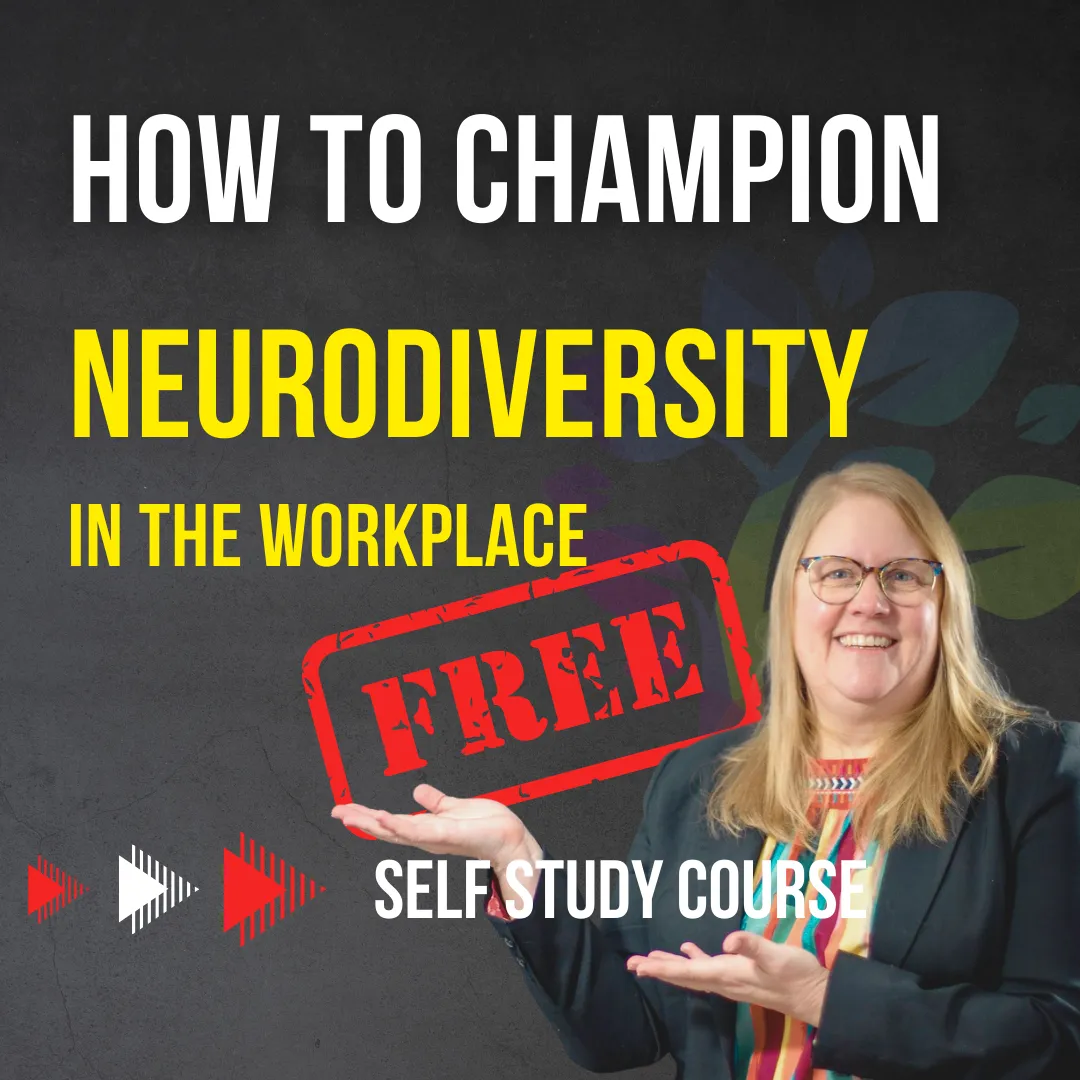
Free Course
How to champion neurodiversity in the workplace
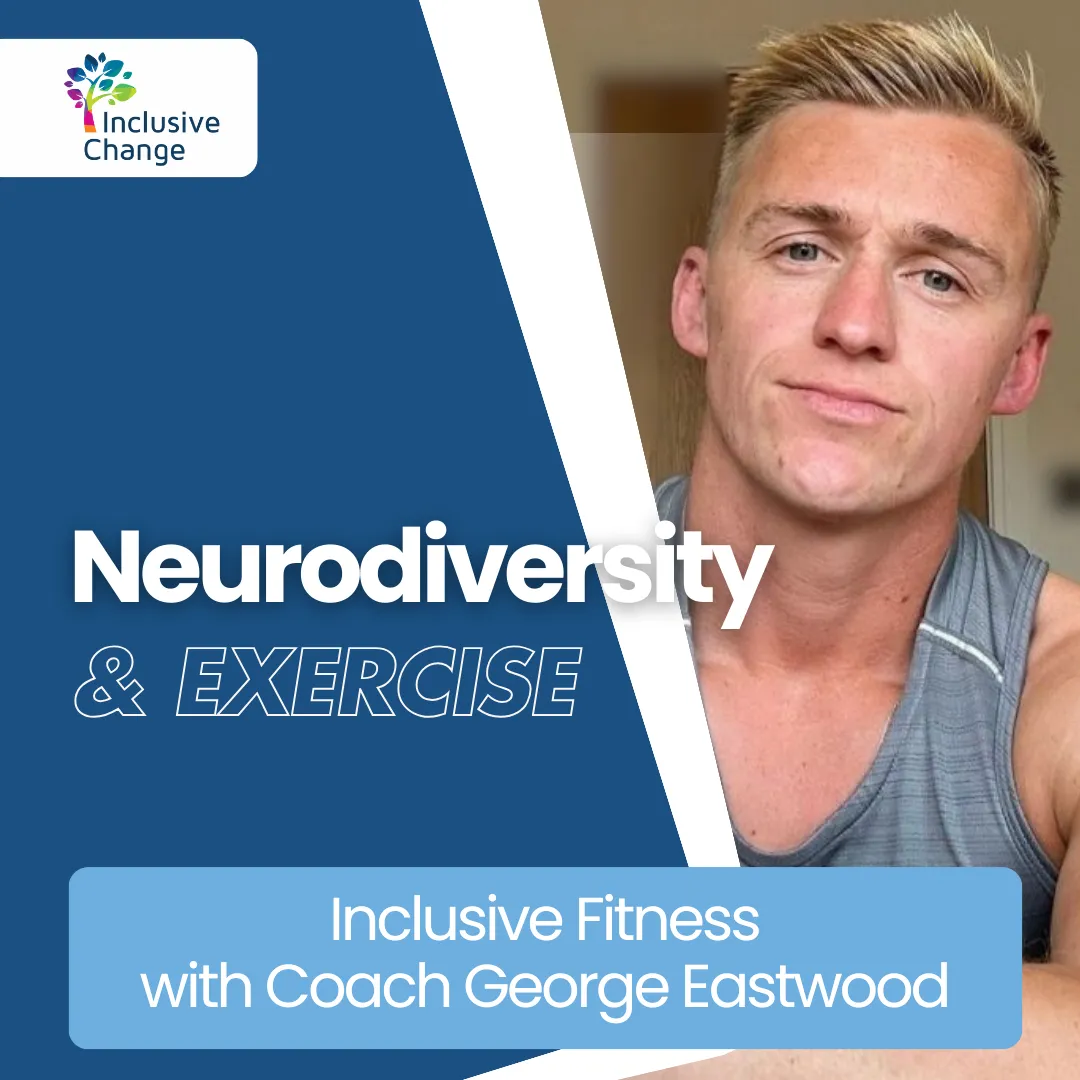
Free Taster Course
Inclusive Fitness -
Taster
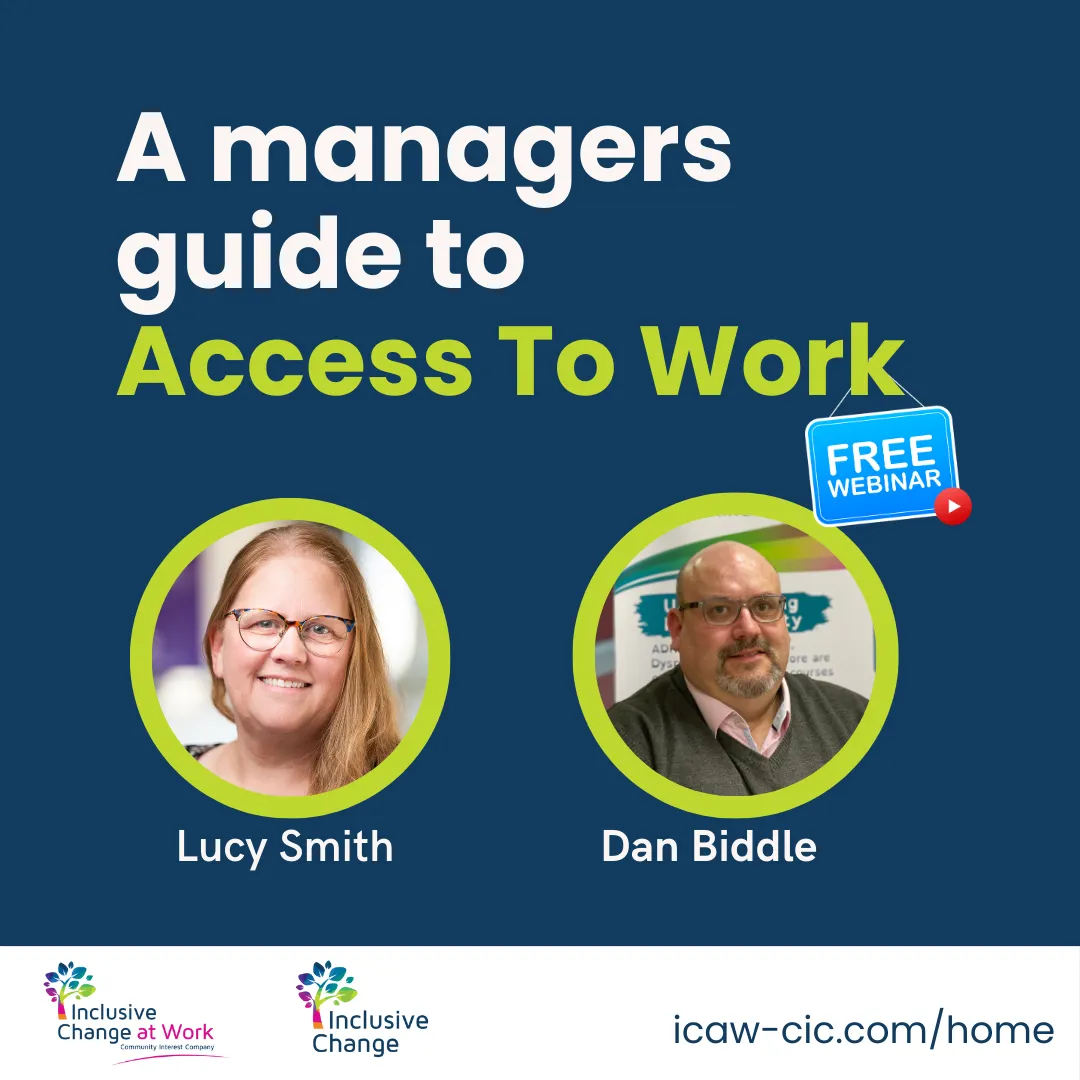
Free Webinar
Access To Work - A managers Guide
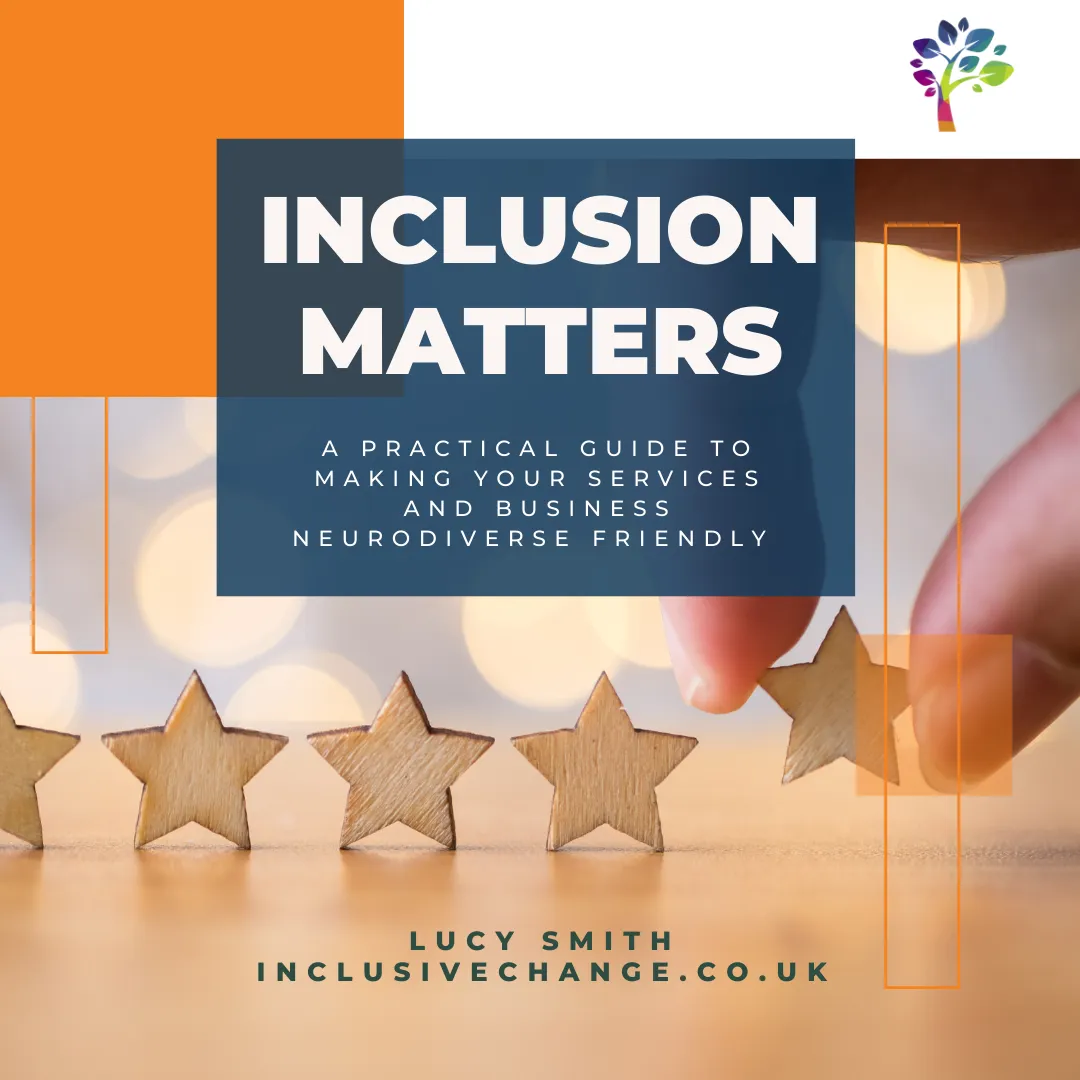
Free E-Book
Inclusion Matters
Free Course
Simplify your
digital life
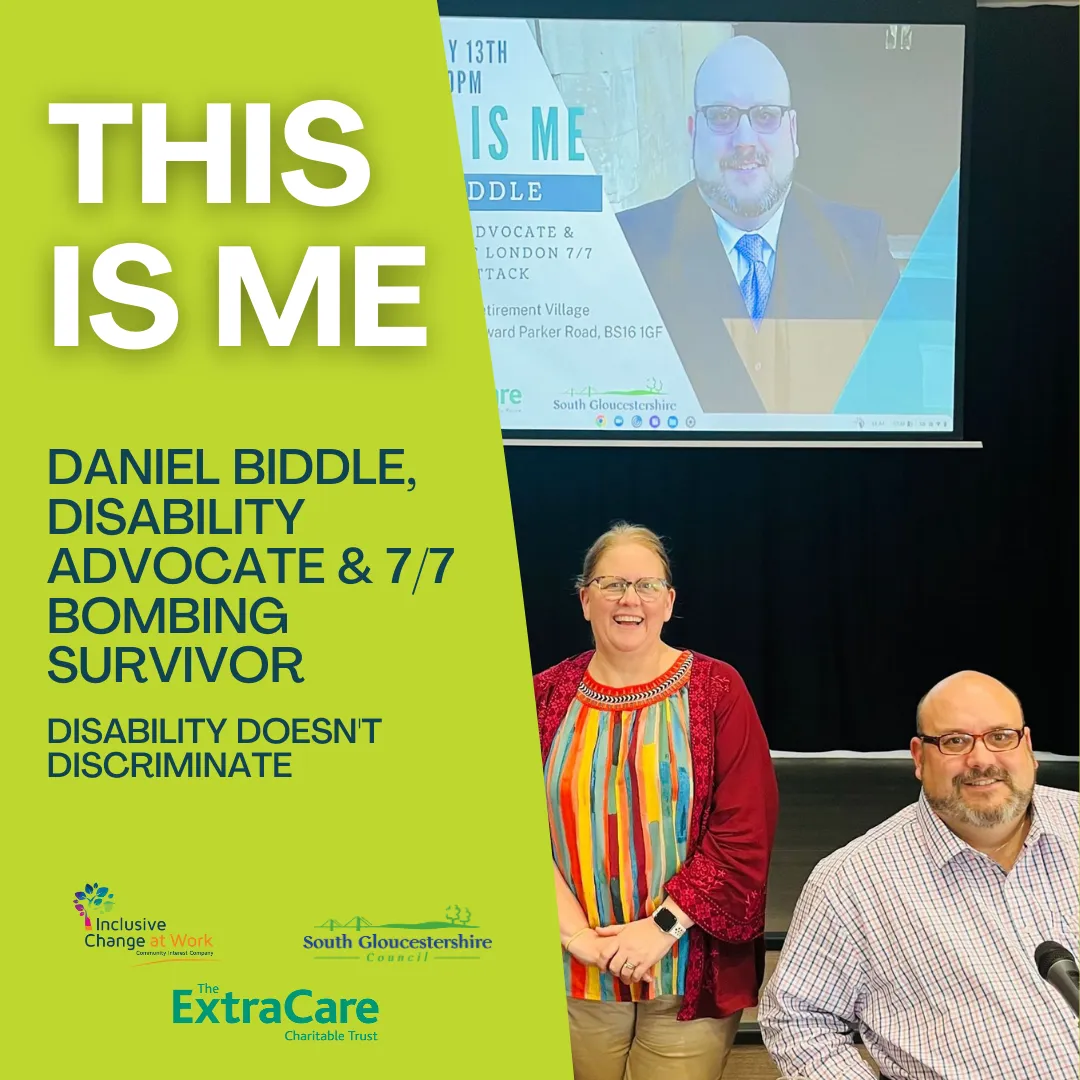
Free Webinar
This is me
Free Webinar
Building the future of work - Careers for young people
Free Webinar
Building the future of work - Recruitment & Retention
Want easy access to all of our free resources? Click on the link below to register and you will get access to all of our free stuff in one place.
We are always adding and updating the list and will notify you when we drop new content.




Inclusive Change Ltd
The Brightwell, Bradbury House
Wheatfield Drive
Bradley Stoke, Bristol
BS329DB
Companies House: 12412464
VAT NO: 352 1564 17
ICO Reg: ZB081779
UK Register of Learning Providers: 10090652
Reg no: 12412464