
Daniel Biddle
Motivational Speaker, Disability Law Expert
Empowering Neurodiversity in the workplace
Daniel Biddle
Daniel is a highly experienced accessibility consultant with extensive experience of disability. Daniel has particular expertise in acquired disability, including acquired neurodiversity.
He established the National Disability Employment & Advisory Service in 2022 and focuses on supporting neurodivergent young people & adults into employment.

Work with me
Ready to transform your understanding of disability law and equity in the workplace?
Would you like me to run a workshop for you? Contact me through Inclusive Change using the calendar below.
Read my blog here
Read more
The blog
Burnout or Poor Performance? Are Your Managers Spotting the Difference?
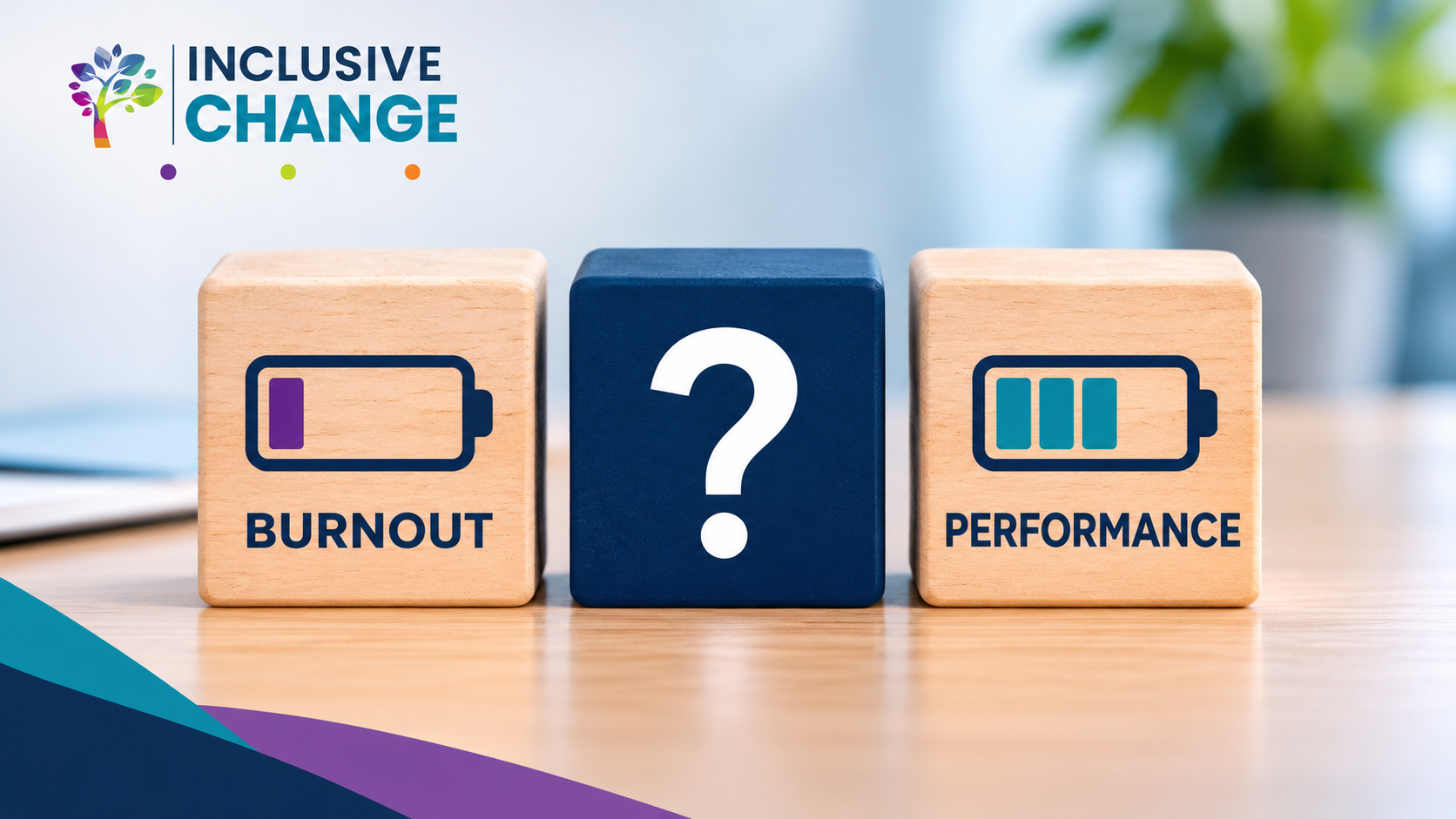
Burnout or Poor Performance? Are Your Managers Spotting the Difference?
An employee starts missing deadlines. Someone who was once enthusiastic becomes disengaged. A reliable team member begins making mistakes, struggling to concentrate or withdrawing from conversations.
Is it a performance issue? A lack of motivation? Or could something else be going on?
For many managers, this is where things become complicated.
The pressure to maintain productivity, meet targets and manage team performance can make it tempting to focus on what is going wrong. But understanding why someone's performance has changed could be the difference between supporting a valuable employee and losing them altogether.
When poor performance isn't really poor performance
Workplace burnout is becoming an increasingly important issue for organisations, but recognising it isn't always straightforward.
We often associate burnout with someone who is visibly exhausted, overwhelmed or unable to work. In reality, the early signs can be much more subtle.
An employee might appear distracted, less motivated or increasingly disorganised. They may become quieter in meetings, struggle with decisions or take longer to complete tasks they previously managed with ease.
Sound familiar?
These are also the kinds of behaviours that might trigger a performance management conversation. And that's where the challenge lies.
How confident are your managers in recognising the difference between an employee who is underperforming and an employee who is struggling to cope?
What happens when managers get it wrong?
Imagine two employees experiencing similar difficulties at work. Both are missing deadlines. Both are making mistakes. Both seem less engaged than usual.
One may need additional training, clearer expectations or support to develop their skills. The other may be experiencing burnout after months of increasing workload, workplace stress and masking their difficulties.
The behaviours look similar. The support they need could be very different.
Now imagine both employees being placed on the same performance improvement plan.
Would that help them succeed? Or could it create further challenges?
This is not about avoiding difficult conversations or lowering performance expectations. It is about equipping managers with the confidence and understanding to make better decisions about what happens next.
Neurodiversity and workplace burnout: what might your managers be missing?
For neurodivergent employees, including people with ADHD and autism, workplace burnout can be particularly complex. An employee may spend considerable energy navigating sensory distractions, managing competing priorities, adapting to unexpected changes or masking aspects of their neurodivergence. From the outside, they may appear to be coping well.
Behind the scenes, the effort required to maintain that performance may be unsustainable.
Some employees become so skilled at masking their difficulties that colleagues and managers have little idea how much they are struggling until their performance begins to change.
This raises some important questions for organisations:
Would your managers recognise the signs of neurodivergent burnout?
Could behaviours associated with ADHD or autism be mistaken for a lack of motivation or commitment?
Are employees comfortable asking for support before they reach crisis point?
Do managers understand when reasonable adjustments might be appropriate?
Are your performance management processes helping employees succeed or unintentionally creating additional barriers?
Neurodiversity awareness is an important starting point. But when managers are faced with real workplace situations, awareness alone may not be enough.
Is workplace change making the problem worse?
Organisational change is a normal part of working life. New technology, restructures, changing leadership, evolving job roles and increasing demands are all part of modern workplaces. But what happens when change becomes constant?
An employee who has previously performed well may suddenly find themselves struggling with new systems, different expectations or an unfamiliar way of working.
For some neurodivergent employees, the cumulative impact of these changes can be significant. Yet the resulting difficulties may be viewed as resistance to change, disengagement or poor performance.
Are your leaders recognising the impact of change on their people, or simply measuring how quickly they adapt?
Inclusive change management requires more than communicating what is changing. It requires leaders to understand how different people experience change and how that can influence wellbeing, engagement and performance.
The challenge for managers: supporting people while maintaining performance
One of the most common concerns we hear from managers is that they want to support their employees but are unsure where the boundaries lie.
How do you have a conversation about declining performance without making assumptions about someone's wellbeing?
How do you respond when an employee discloses that they are struggling?
What happens when reasonable adjustments are in place, but performance concerns remain?
And how do you balance the needs of one employee with the needs of the wider team?
These are not always easy questions to answer.
Managers are often expected to navigate complex situations involving neurodiversity, mental health, employee wellbeing and performance management without having received the practical training to do so confidently.
The result can be uncertainty, inconsistent approaches and difficult conversations that are delayed until problems become more serious.
Are your managers equipped for the conversations that matter?
Building an inclusive, high-performing workplace is not simply about having the right policies or delivering a neurodiversity awareness session.
It is about what happens when a manager is faced with a real situation and needs to decide what to do next.
At Inclusive Change, we help organisations develop confident, capable managers who can recognise workplace barriers, navigate difficult conversations and support employees to perform at their best.
Through our practical neurodiversity training, inclusive leadership development and management workshops, we explore the real challenges managers face and help them build the skills to respond effectively.
Because understanding neurodiversity is one thing. Knowing how to apply that understanding when performance, wellbeing and business priorities collide is something else entirely.
Start the conversation: Burnout or Performance?
If this article has raised questions about how your organisation approaches employee performance and workplace burnout, our upcoming free webinar is a great place to start.
Burnout or Performance? How to Spot the Difference
As part of our Leading Inclusive Change webinar series, we will explore why burnout can be mistaken for poor performance, what managers should be looking out for and why getting the response right matters.
Wednesday 18th November 2026 | Free online webinar
Ready to go beyond awareness?
If your organisation is looking to develop managers' confidence in handling performance, wellbeing, neurodiversity and reasonable adjustments, our tailored training programmes can help.
From practical workshops to our Inclusive People Manager Programme, we help managers develop the skills to turn understanding into effective everyday practice.
Explore our Neurodiversity Training for Managers
Or get in touch to discuss how Inclusive Change can support your organisation.

Column Header
Lorem ipsum dolor sit amet consecetuer lorem ipsum
Organically grow the holistic world view of disruptive innovation
At the end of the day, going forward, a new normal that has evolved
Column Header
Lorem ipsum dolor sit amet consecetuer lorem ipsum
Organically grow the holistic world view of disruptive innovation
At the end of the day, going forward, a new normal that has evolved
Column Header
Lorem ipsum dolor sit amet consecetuer lorem ipsum
Organically grow the holistic world view of disruptive innovation
At the end of the day, going forward, a new normal that has evolved
Some of the Organisations Inclusive Change Have Worked With


Inclusive Change Ltd
The Brightwell, Bradbury House
Wheatfield Drive
Bradley Stoke, Bristol
BS329DB
VAT NO: 352 1564 17
ICO Reg: ZB081779
UK Register of Learning Providers: 10090652
Copyright 2025 - Inclusive Change Ltd