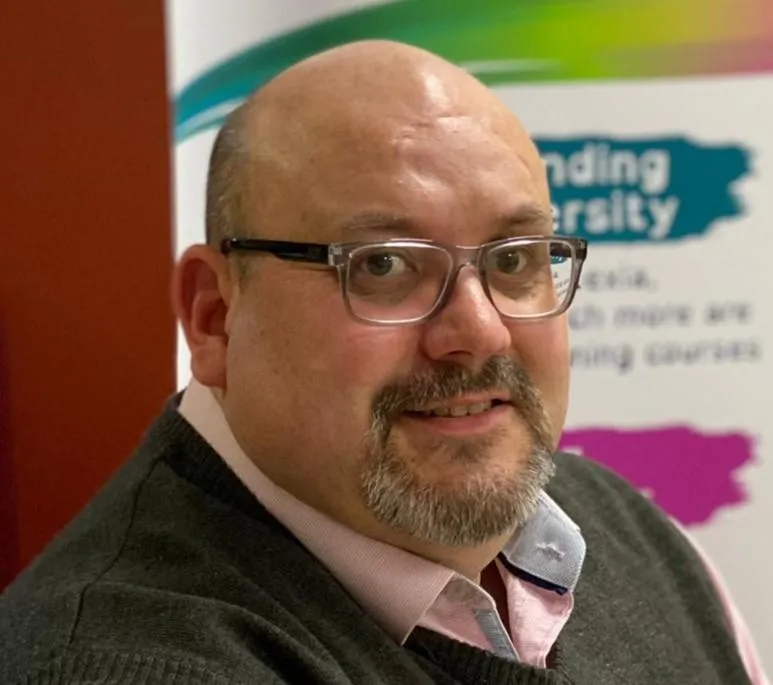
Daniel Biddle
Motivational Speaker, Disability Law Expert
Empowering Neurodiversity in the workplace
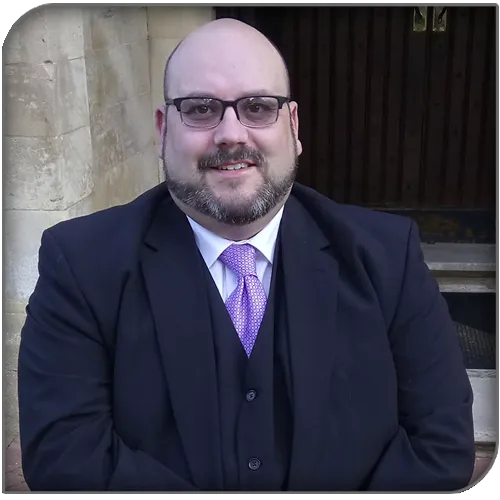
Daniel Biddle
Daniel is a highly experienced accessibility consultant with extensive experience of disability. Daniel has particular expertise in acquired disability, including acquired neurodiversity.
He established the National Disability Employment & Advisory Service in 2022 and focuses on supporting neurodivergent young people & adults into employment.
Work with me
Ready to transform your understanding of disability law and equity in the workplace?
Would you like me to run a workshop for you? Contact me through Inclusive Change using the calendar below.
Read my blog here
Read more
The blog
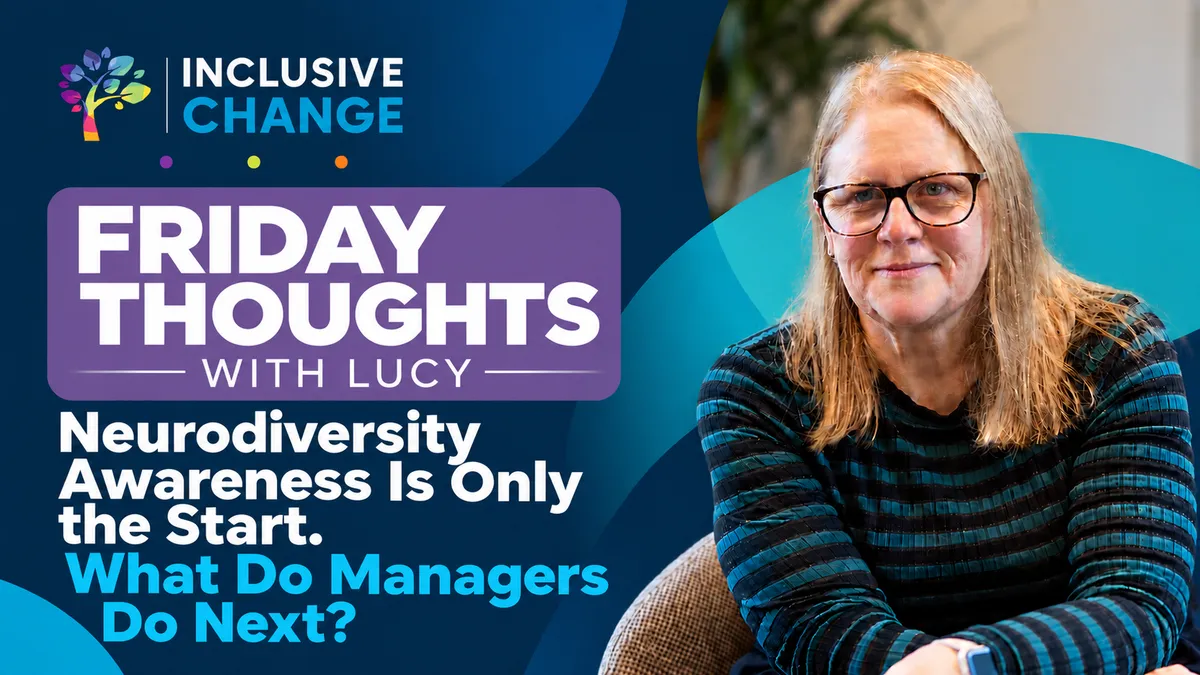
Neurodiversity Awareness Is Only the Start. What Do Managers Do Next?
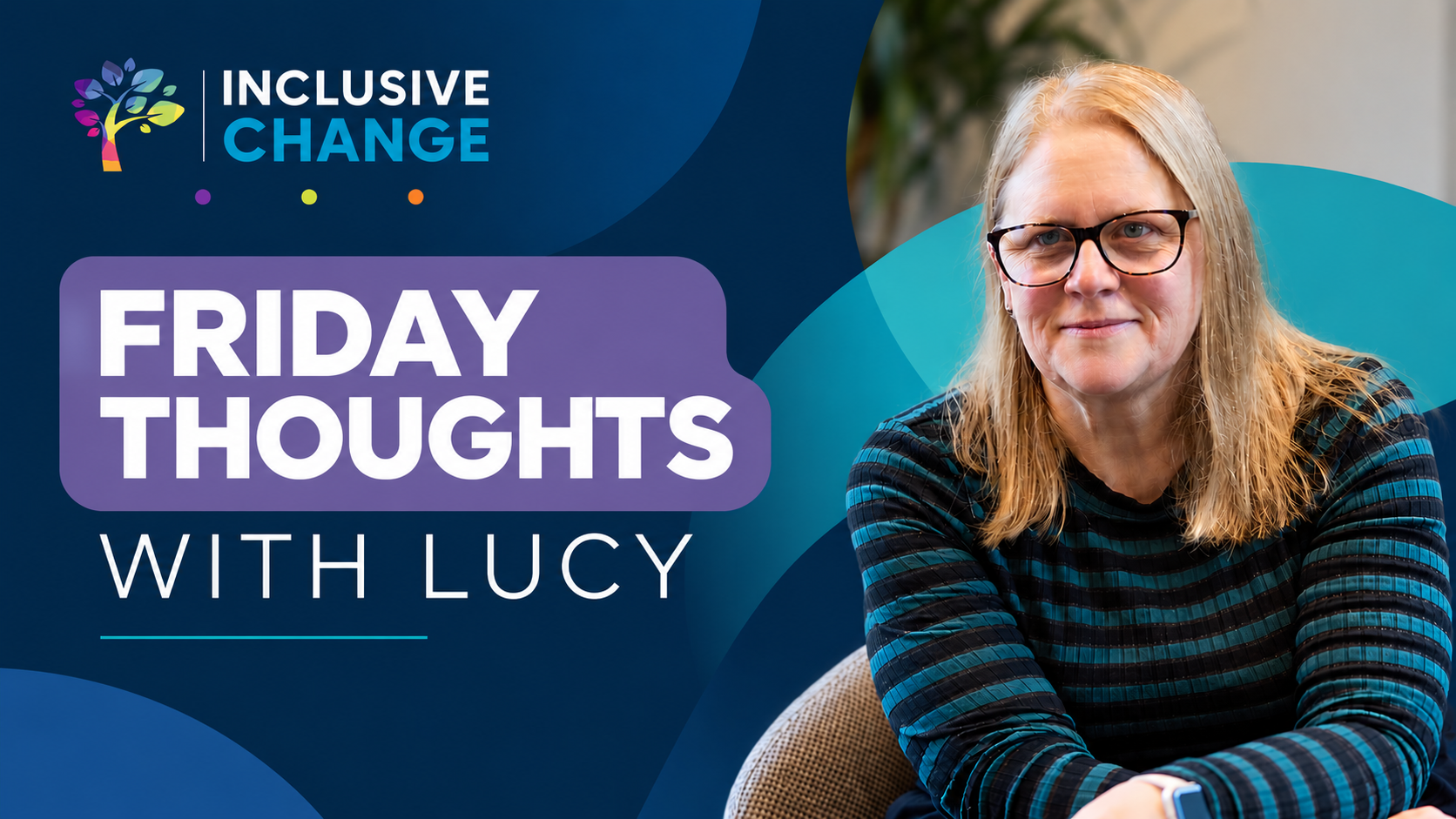
Friday Thoughts with Lucy
Work, people, change and whatever else has caught my attention this week.
Neurodiversity Awareness Is Only the Start. What Do Managers Do Next?
First things first on a personal note my daughter has managed a whole week at university, surviving welcome week has been a heck of an achievement and it seems to be going well. We have both been learning lots - me, about not jumping to the rescue when things aren’t going well, and for her …. Well that’s another article entirely.
So, with all my new found time as an almost empty nest parent, I have been on the road and I’ve spent a lot of this week talking about neurodiversity in some very different workplaces.
I’ve been training managers in social housing and hospitality, and on Wednesday we hosted the NATTC 999 Neurodiversity Summit, bringing together people from across our emergency services. Different jobs, different environments and very different pressures, but I’ve noticed something interesting.
Managers are asking remarkably similar questions.
And they’re not usually asking me, “What is autism?” or “What are the traits of ADHD?”
They’re asking things like: What do I do if someone is blunt and other members of the team think they’re rude? How do I know whether something is a reasonable adjustment? What if an adjustment affects everybody else? What if someone needs lots of support - are they still working independently? What happens when someone’s behaviour is affecting the rest of the team? And how quickly am I supposed to make a decision when someone asks me for an adjustment?
These aren’t bad questions.
They’re the questions you get when awareness meets the reality of managing people.
One thing that stuck with me this week..
One of the speakers at Wednesday’s summit talked about being dyslexic and working as a call handler.
She had worried that dyslexia would mean she couldn’t do the job because she might struggle to accurately match addresses. In an emergency environment, accuracy isn’t an optional extra. You can’t simply lower the standard in the name of inclusion.
Except she achieved 98% accuracy.
What I loved about her story was what happened next. When her work changed and she needed to produce longer written reports, that was where her dyslexia created a significant barrier.
Same person. Same dyslexia. Different task. Completely different impact.
It is such a simple example of why managers can’t manage people from a list of neurodivergent traits.
The question isn’t, “What can a dyslexic person do?”
It’s much more useful to ask: What does this particular task require? What is getting in the way for this person? What standard actually needs to be met? And what could we change or support that would enable them to meet it?
That employee didn’t need the accuracy standard lowered. She was already meeting it.
The barrier was somewhere else.
This is where awareness gets complicated
I’ve been saying for a while that I think the neurodiversity awareness phase is coming to an end. I don’t mean awareness doesn’t matter; it absolutely does. But organisations increasingly know they have neurodivergent employees. Managers have attended the training. Many understand the basic terminology.
Now they’re having to work out what to do.
And that’s where it gets messy, because managing people rarely gives us a lovely textbook example with an obvious answer.
Someone can be autistic and their communication can be upsetting colleagues. An employee can genuinely need an adjustment and a manager may need time to understand the operational implications. Two employees with the same diagnosis can need completely different things. Something that works brilliantly for one person can create a new barrier for somebody else.
Good neuroinclusive management isn’t about saying yes to everything, lowering standards or memorising the characteristics of different diagnoses.
It’s about becoming better at asking questions, identifying the actual barrier and making thoughtful decisions about real people in real workplaces.
So I’ve started writing the questions down
After hearing variations of these conversations again and again this week, I’ve started turning them into a series of short articles answering the questions managers often ask me but may not always feel comfortable asking publicly.
Things like:
“Isn’t this just everyone?”
“What do I do when someone is blunt and the team thinks they’re rude?”
“If they need that much support, are they really working independently?”
“How long should it take me to decide whether a reasonable adjustment is reasonable?”
They’re not trick questions and I’m not interested in making managers feel bad for asking them. Most of the time, they’re trying to do the right thing while balancing the needs of an individual, their colleagues, the job and the organisation.
That’s the bit of inclusion I think we need to talk about much more.
Not simply knowing more.
Knowing what to do next.
I’ll start sharing the series over the next few weeks.
Have a good weekend,
Lucy
P.S. If you haven't signed up for our FREE Leading Change Webinar next Tuesday, there's still time! Click here for more information and registration
Column Header
Lorem ipsum dolor sit amet consecetuer lorem ipsum
Organically grow the holistic world view of disruptive innovation
At the end of the day, going forward, a new normal that has evolved
Column Header
Lorem ipsum dolor sit amet consecetuer lorem ipsum
Organically grow the holistic world view of disruptive innovation
At the end of the day, going forward, a new normal that has evolved
Column Header
Lorem ipsum dolor sit amet consecetuer lorem ipsum
Organically grow the holistic world view of disruptive innovation
At the end of the day, going forward, a new normal that has evolved
Some of the Organisations Inclusive Change Have Worked With


Inclusive Change Ltd
The Brightwell, Bradbury House
Wheatfield Drive
Bradley Stoke, Bristol
BS329DB
VAT NO: 352 1564 17
ICO Reg: ZB081779
UK Register of Learning Providers: 10090652
Copyright 2025 - Inclusive Change Ltd