
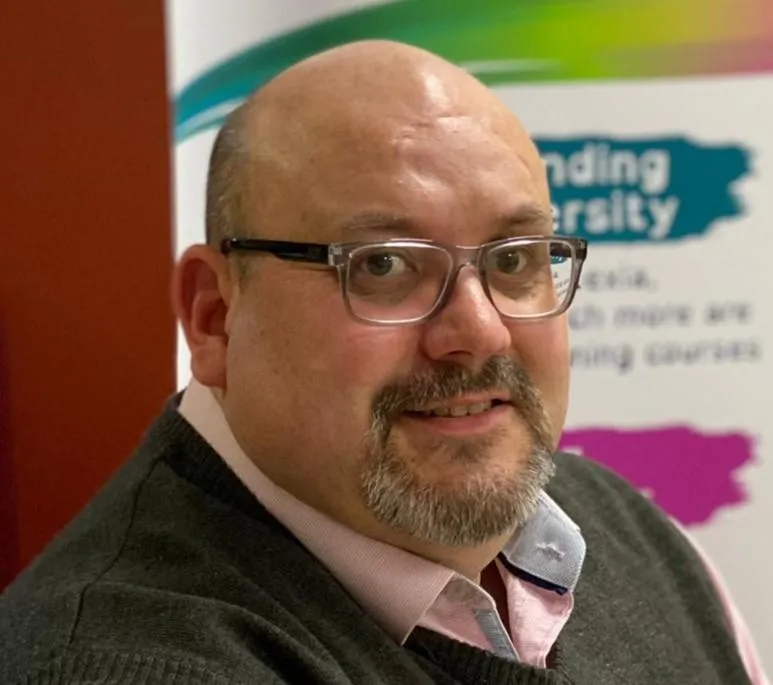
Daniel Biddle
Motivational Speaker, Disability Law Expert
Empowering Neurodiversity in the workplace
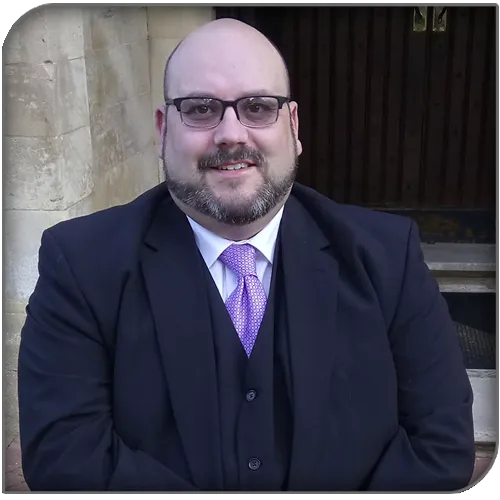
Daniel Biddle
Daniel is a highly experienced accessibility consultant with extensive experience of disability. Daniel has particular expertise in acquired disability, including acquired neurodiversity.
He established the National Disability Employment & Advisory Service in 2022 and focuses on supporting neurodivergent young people & adults into employment.
Work with me
Ready to transform your understanding of disability law and equity in the workplace?
Would you like me to run a workshop for you? Contact me through Inclusive Change using the calendar below.
Read my blog here
Read more
The blog
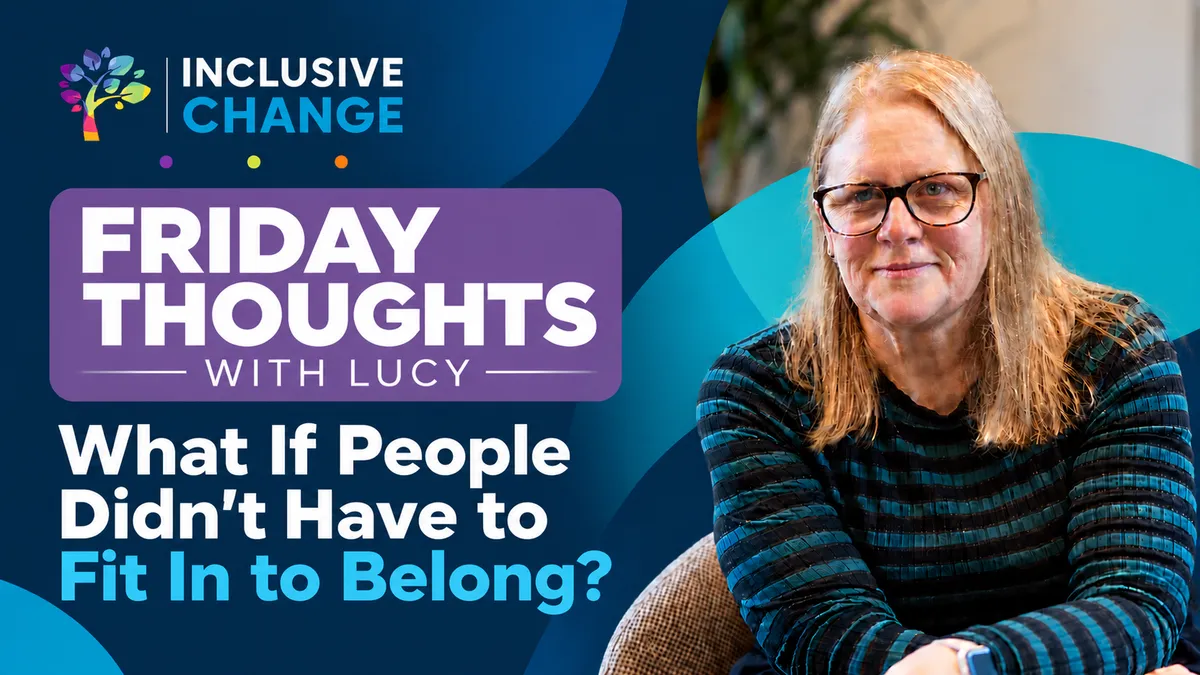
What If People Didn’t Have to Fit In to Belong?
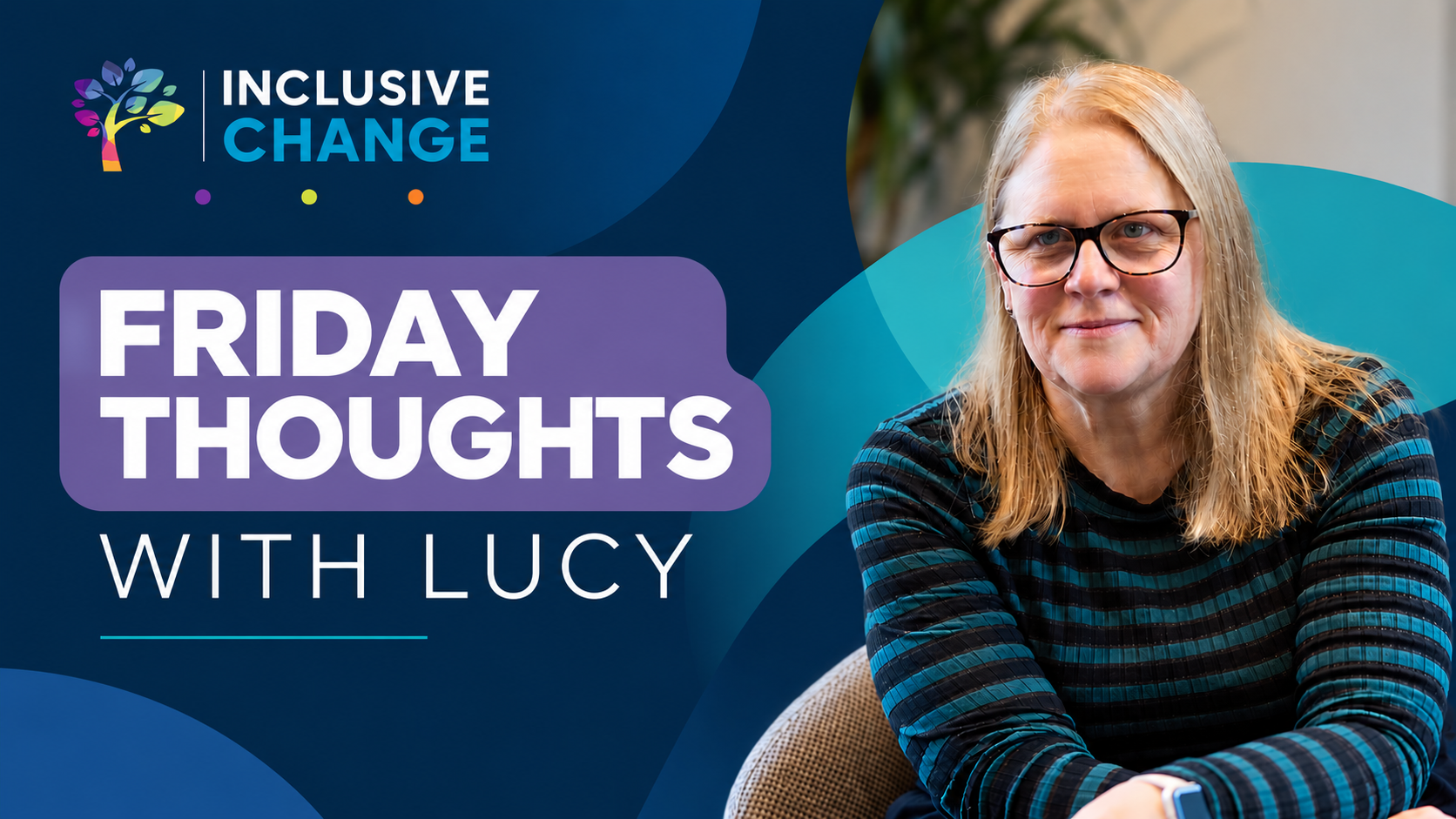
Friday Thoughts with Lucy
Work, people, change and whatever else has caught my attention this week.
What If People Didn’t Have to Fit In to Belong?
This weekend my daughter is going to university.
We’ve been preparing for this for about six months. We’ve thought about accommodation and support, DSA and what might cause overwhelm. She’s volunteered, worked part-time, travelled and deliberately practised some of the social and communication things that might make university life easier.
We’ve prepared for the transition in just about every practical way I can think of. What I appear to have been rather less prepared for is her actually going.
I think I’ve been so busy concentrating on making the transition work that I’ve managed to avoid thinking too much about the reality of her leaving home. This is her second attempt at university, so perhaps that’s been part of it too. I want this to work for her, but I also know that success doesn’t have to mean everything going perfectly.
There will be things we haven’t anticipated. There will probably be difficult days. The important thing is that this time she knows herself better, we know more about what she needs, and there is support around her.
So if you’re reading this while packing a car, buying a new quilt cos you didn't realise the old one was no longer fit for purpose or quietly wondering how your child became old enough to leave home, good luck. And if you’re the person heading off to university, good luck to you too. You don’t have to have the next three years figured out before you arrive.
Team building for people who hate team building
Something rather different happened at work this week.
We ran a session with our own Inclusive Change team so they could experience DECID:R properly. I spend a lot of time talking about it, building things around it and explaining it to other people, so it seemed sensible that our team should actually have a go.
I wasn’t entirely sure how it would go. We’re a neurodivergent team, and some of us would run quite a long way in the opposite direction if someone announced an afternoon of compulsory “team building”.
Yet everyone got involved. There was discussion, disagreement, problem-solving, laughter and some very interesting decision-making. At the end, one member of the team who would ordinarily avoid this kind of activity announced, rather proudly: “That was fun.”
I loved that.
It made me wonder whether there might be a market for team building for people who hate team building.
Because perhaps the problem isn’t that some people don’t like being part of a team. Perhaps they don’t like what we’ve decided team building is supposed to look like.
What does inclusive team building actually look like?
Traditional team building can contain quite a few things some people find difficult: forced social interaction, unclear expectations, being put on the spot, physical activities, competition, lots of noise, pressure to perform enthusiasm and the occasional request to reveal something personal to colleagues.
None of those things automatically builds psychological safety.
For diverse and neurodivergent teams, I’d start somewhere different. Give people a shared problem rather than forcing social interaction. Having something interesting to solve together gives conversation a purpose and lets relationships develop through doing rather than demanding that people “bond”.
I’d also make participation predictable without making it rigid. Tell people what will happen, how long it will last and what they might be asked to do. Give people different ways to contribute rather than assuming the loudest person in the room is the most engaged.
And perhaps most importantly, don’t confuse discomfort with development. A good team activity can challenge people, but psychological safety isn’t created by deliberately embarrassing someone and then telling them they’ve left their comfort zone.
The aim isn’t to make everybody behave in the same way. It’s to create the conditions where different people can contribute.
That’s one of the things I’m enjoying about using Decid:R Interactive Workshops in this way. The scenario gives everyone something external to focus on, but what emerges is the interesting bit: who notices what, who asks questions, who challenges an assumption, how the group reaches a decision and what happens when somebody sees the situation completely differently.
Sometimes difference makes things messier. It can also make decisions considerably better.
Perhaps that’s true of university too. The goal isn’t necessarily to become better at fitting into environments designed around everybody else. Sometimes we need to get better at designing environments where more people can belong and participate in the first place.
That’s something I’ll probably be thinking about quite a lot this weekend.
Wish us luck. I will probably be crying at Costa adverts all weekend.
Lucy

Column Header
Lorem ipsum dolor sit amet consecetuer lorem ipsum
Organically grow the holistic world view of disruptive innovation
At the end of the day, going forward, a new normal that has evolved
Column Header
Lorem ipsum dolor sit amet consecetuer lorem ipsum
Organically grow the holistic world view of disruptive innovation
At the end of the day, going forward, a new normal that has evolved
Column Header
Lorem ipsum dolor sit amet consecetuer lorem ipsum
Organically grow the holistic world view of disruptive innovation
At the end of the day, going forward, a new normal that has evolved
Some of the Organisations Inclusive Change Have Worked With


Inclusive Change Ltd
The Brightwell, Bradbury House
Wheatfield Drive
Bradley Stoke, Bristol
BS329DB
VAT NO: 352 1564 17
ICO Reg: ZB081779
UK Register of Learning Providers: 10090652
Copyright 2025 - Inclusive Change Ltd