
Daniel Biddle
Motivational Speaker, Disability Law Expert
Empowering Neurodiversity in the workplace
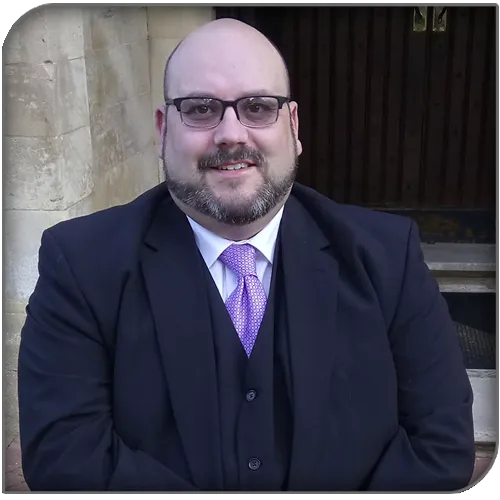
Daniel Biddle
Daniel is a highly experienced accessibility consultant with extensive experience of disability. Daniel has particular expertise in acquired disability, including acquired neurodiversity.
He established the National Disability Employment & Advisory Service in 2022 and focuses on supporting neurodivergent young people & adults into employment.
Work with me
Ready to transform your understanding of disability law and equity in the workplace?
Would you like me to run a workshop for you? Contact me through Inclusive Change using the calendar below.
Read my blog here
Read more
The blog

Disney's Wall-e and the future of work
What Watching WALL·E Taught Me About the Future of Work
Confession: WALL·E is probably one of my favourite Pixar films. Second only to Inside Out. I put it on thinking I’d enjoy a bit of nostalgia after my son got a WALL-E lego set for Christmas… and ended up pausing it halfway through because, well, it hit uncomfortably close to home.
Because WALL·E isn’t just a love story between two robots. It’s a warning. And honestly? It’s a pretty accurate metaphor for where the future of work is heading if we’re not careful.
Here is what I think...
From Pixar Dystopia to Office Reality
At first glance, WALL-E is about a lonely robot cleaning up a planet humans abandoned. But look closer and you’ll see themes HR leaders and L&D professionals should be paying serious attention to.
Here’s what stood out to me when I watched it through a “future of work” lens
Humans designed work for efficiency, not humanity
In WALL·E, everything is optimised. Chairs move for you. Screens tell you what to do. Thinking is optional.
Sound familiar?
In modern workplaces, we’re obsessed with productivity tools, KPIs, dashboards, and automation - but often forget to ask: does this actually work for human brains?
Cognitive atrophy is a real risk
The humans on the Axiom aren’t incapable - they’re underused. Their environment has removed the need for curiosity, problem-solving, or creativity.
In workplaces, over-process and over-automation can quietly do the same thing. Especially for neurodivergent thinkers who thrive on challenge and meaning.
I don't want my children to be living in a world without curiosity and creativity - do you?
One-size-fits-all systems fail everyone
Every human in WALL·E has the same chair, same screen, same routine.
But brains don’t work like that. Neurodiversity reminds us that standardisation creates exclusion. When work is designed for an imaginary “average employee”, people burn out, disengage, or leave.
Connection beats convenience
The turning point in WALL·E isn’t new tech - it’s connection. Humans look up from their screens. They talk. They notice each other.
Remote, hybrid, in-person… it’s not about location. It’s about intentional connection and psychologically safe environments where people feel seen.
Neurodivergent traits are future skills
Curiosity. Persistence. Pattern-spotting. Deep focus. Questioning “why”.
Sound like WALL·E?
These are the very traits organisations say they want – yet workplaces often suppress them through rigid rules and outdated norms.
Leadership without reflection is dangerous
AUTO, the autopilot system, keeps things running “as designed”, long after it’s stopped serving humans.
This is what happens when leaders don’t revisit assumptions. Policies, performance models, and “how we’ve always done it” can quietly become barriers.
The future of work is a redesign, not an upgrade
Humans don’t return to Earth with better tech - they return with a new relationship to work, effort, and purpose.
The future of work isn’t about piling new tools onto old systems. It’s about redesigning work around real human needs.
So… What Does This Mean for Organisations…Now?
If we’re building the future of work with neurodiversity in mind (and we should be), WALL·E gives us a powerful reminder:
When work stops working for humans, humans disengage.
When work is designed for humans, everyone thrives.
At inclusivechange.co.uk, we spend our time helping organisations pause, reflect, and think about people before they drift into autopilot. Neurodiversity-affirming workplaces aren’t a “nice to have”. They’re how we build resilient, innovative, future-ready organisations.
Over to You
When you think about your organisation:
Where have systems replaced thinking?
Where has “efficiency” trumped wellbeing?
And where could a more human-centred, neuro-inclusive approach change everything?
What’s the biggest challenge you’re seeing with the future of work right now?
And... for the film lovers... what other films get you thinking about the future of work? (other than Terminator and Minority Report of course!)
Share your thoughts – let’s start the conversation.
If you want help redesigning work with neurodiversity in mind, you know where we are: [email protected]
You can also join our Lunch and Learn on 14th Jan all about AI, Change and Neurodiversity.
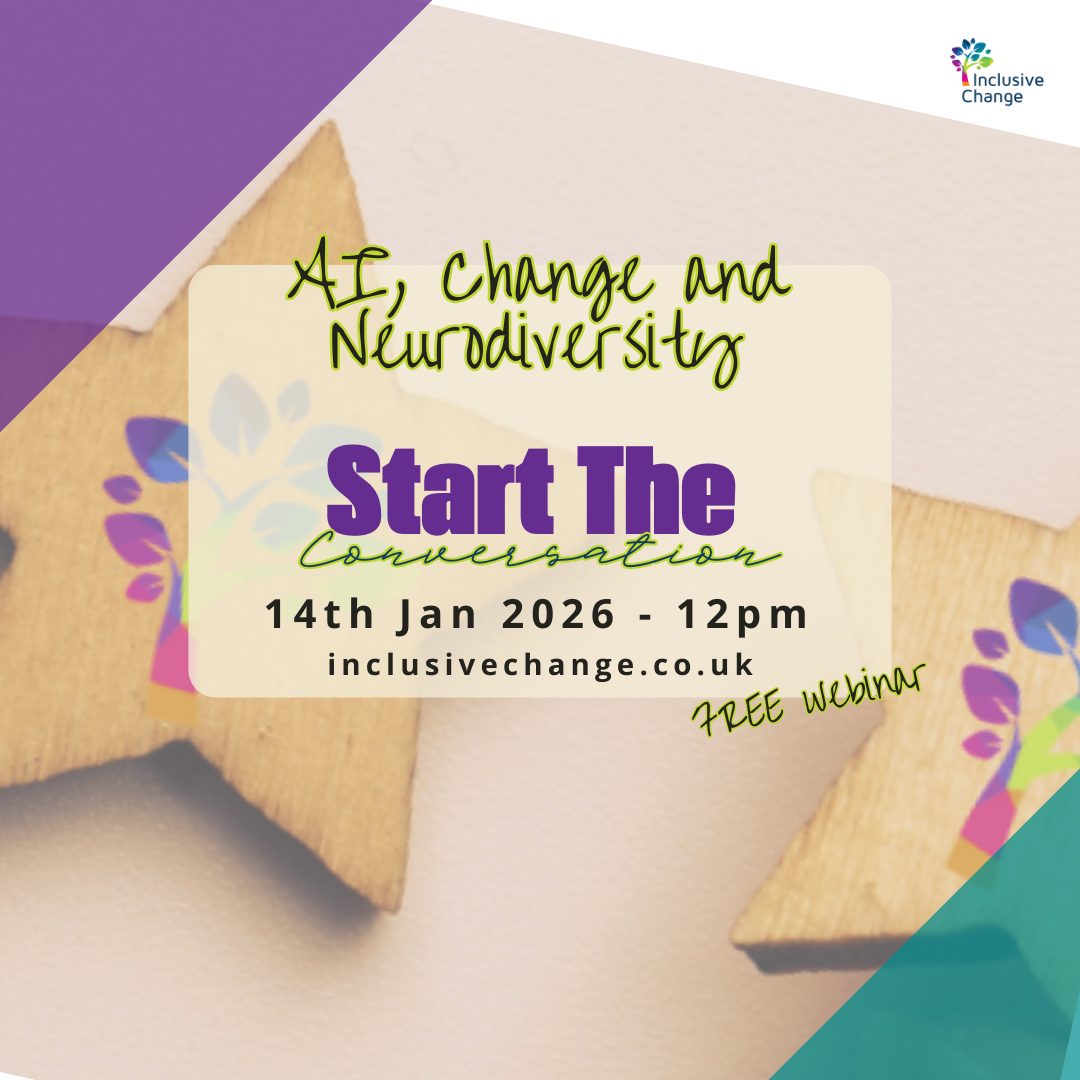
Wednesday the 14th of January 2026, 12pm
30 minutes - Online
Prepare your organisation, and your people, for the future of work.
AI is reshaping how we work, communicate, collaborate, and make decisions.
Our workforce is changing - are you ready to keep up?
Book here: https://inclusivechange.co.uk/stc-ai-change-and-neurodiversity
Questions about this blog
1. Why do people say Wall-E is about the future of work?
People often link Wall-E to the future of work because it shows what happens when work systems prioritise automation and efficiency over human thinking. In the film, humans become disengaged, passive, and disconnected from meaningful activity. In modern workplaces, similar risks appear when work is overly automated, over-structured, or designed without considering how different brains actually function.
2. What does Wall-E teach us about neurodiversity at work?
Wall-E highlights the dangers of designing environments for one “default” way of being human. Neurodiversity at work recognises that people think, process information, and engage differently. The film reinforces the idea that inclusive design benefits everyone, while rigid systems disproportionately disadvantage neurodivergent employees such as autistic, ADHD, and dyslexic people.
3. How is automation affecting the future of work for neurodivergent people?
Automation can be empowering or disabling, depending on how it is implemented. For neurodivergent people, poorly designed automation can increase cognitive overload, reduce autonomy, and remove opportunities to use strengths like creativity and deep focus. When automation is human-centred, it can instead reduce burnout, remove unnecessary barriers, and support sustainable ways of working.
4. What is a “human-centred workplace” and why does it matter now?
A human-centred workplace is designed around real human needs rather than rigid processes or outdated productivity models. This matters now because burnout, disengagement, and retention challenges are rising. Human-centred design supports wellbeing, psychological safety, and inclusion, all of which are essential for the future of work, particularly in neurodiverse teams.
5. How can organisations build the future of work with neurodiversity in mind?
Organisations can build the future of work with neurodiversity in mind by redesigning how work is structured, communicated, and measured. This includes flexible working, clear expectations, inclusive leadership, and proactive neurodiversity training with Inclusive Change. Instead of asking people to adapt to systems, future-ready organisations adapt systems to people.
Column Header
Lorem ipsum dolor sit amet consecetuer lorem ipsum
Organically grow the holistic world view of disruptive innovation
At the end of the day, going forward, a new normal that has evolved
Column Header
Lorem ipsum dolor sit amet consecetuer lorem ipsum
Organically grow the holistic world view of disruptive innovation
At the end of the day, going forward, a new normal that has evolved
Column Header
Lorem ipsum dolor sit amet consecetuer lorem ipsum
Organically grow the holistic world view of disruptive innovation
At the end of the day, going forward, a new normal that has evolved
Some of the Organisations Inclusive Change Have Worked With


Inclusive Change Ltd
The Brightwell, Bradbury House
Wheatfield Drive
Bradley Stoke, Bristol
BS329DB
VAT NO: 352 1564 17
ICO Reg: ZB081779
UK Register of Learning Providers: 10090652
Copyright 2025 - Inclusive Change Ltd