






Lucy Smith
Neurodiversity & Inclusive Change Speaker, Facilitator, Compare
Lucy Smith, a keynote speaker on neurodiversity, resilience & inclusive change, helps organisations build inclusive, adaptive cultures that thrive on difference. Inspiring audiences & making a difference
Neurodiversity | Managing Change | Resilience
Life Stories | Social Enterprise
Authentic storytelling that makes a difference
Hi, I am Lucy!
Some people call me the "pocket rocket". I think that is because I have passion and energy to bring out the best in an audience.
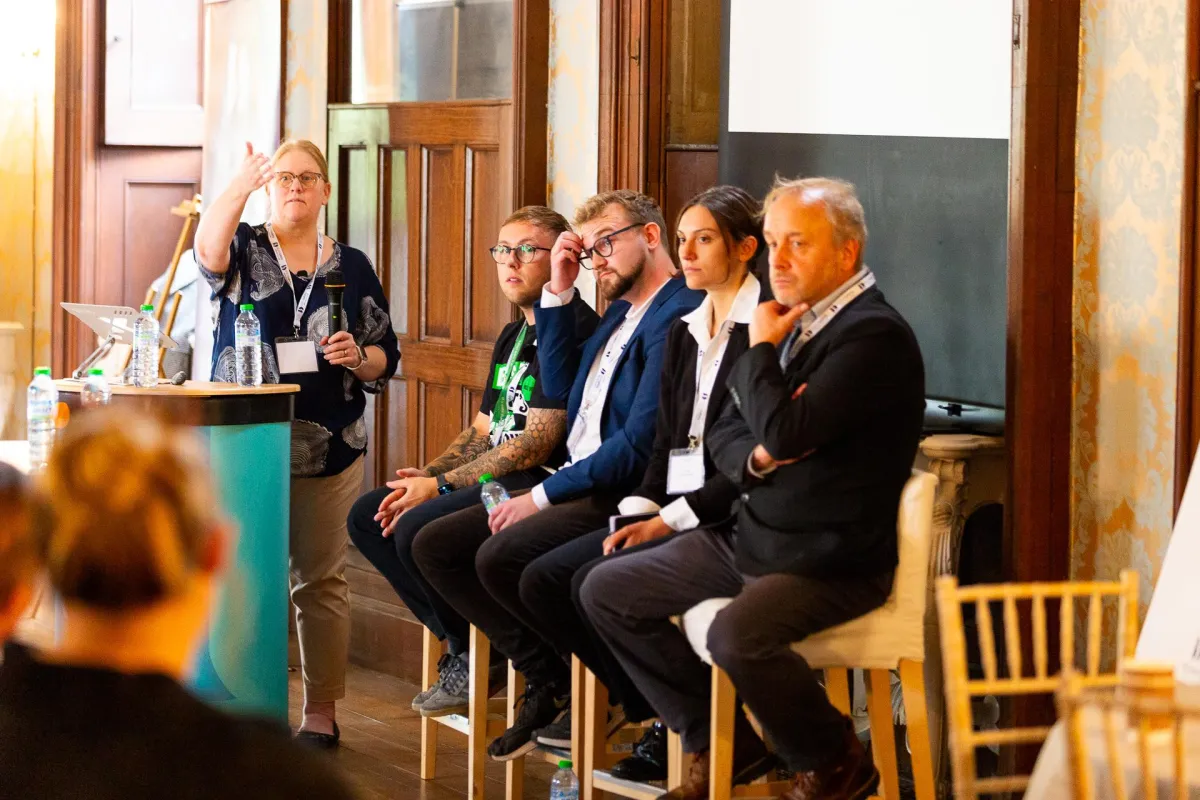
I have been working with audiences for almost 25 years in many guises - Lecturer, radio presenter, drama teacher, children's entertainer (I have been a professional fairy) facilitator, compare and speaker.
As a speaker I believe there has to be some substance behind us and I sure have that too. Not being able to settle and always saying "YES" to opportunities has led to a whole lot of experience that informs my work and my presentations.
At my core I am a purpose led social entrepreneur who loves to start a conversation about topics that matter.
I start those conversations with stories some that will surprise and some that will inspire. I talk about some difficult stuff and combine my unique expertise and knowledge.
Relatable, authentic and thought provoking
Lucy x

Neurodiversity
What is your perspective?
I come from a range of different perspectives when I talk about neurodiversity. From pedagogy, organisation development and leadership, research, personal and family and real lived experience. With a a strengths based approach I talk positively and with passion about change and neurodiversity in work, school and community.
I engage audiences to get them thinking and start conversations that will make and does make a lasting difference.
Change Management
Let me meet you at your
bus-stop
In the world of change management, it's not about imposing a new route; it's about understanding where you're starting from.
I have spent a decade working with senior leaders in transformational change where I have learned that change is often an individual journey and we will all join that journey from a different bus-stop.
I combine theory with reality and always have an eye on the future.
Life Stories
The secret change agent
A wealth of stories based on real lived experience with plenty of lessons for the future. Spilling some my secrets on here would be giving away some of my best work which you will want to hear straight from the source.
Oh, okay, let's just say I can talk about resilience, royalty, and some really fun stuff from a career in international law enforcement.
Social Enterprise
Making a difference - the torch that lights the stars
Lighting people up to make sustainable change happen is a big part of what I do. From setting up a community radio station to developing an innovative and groundbreaking conference around digital wellbeing and young people.
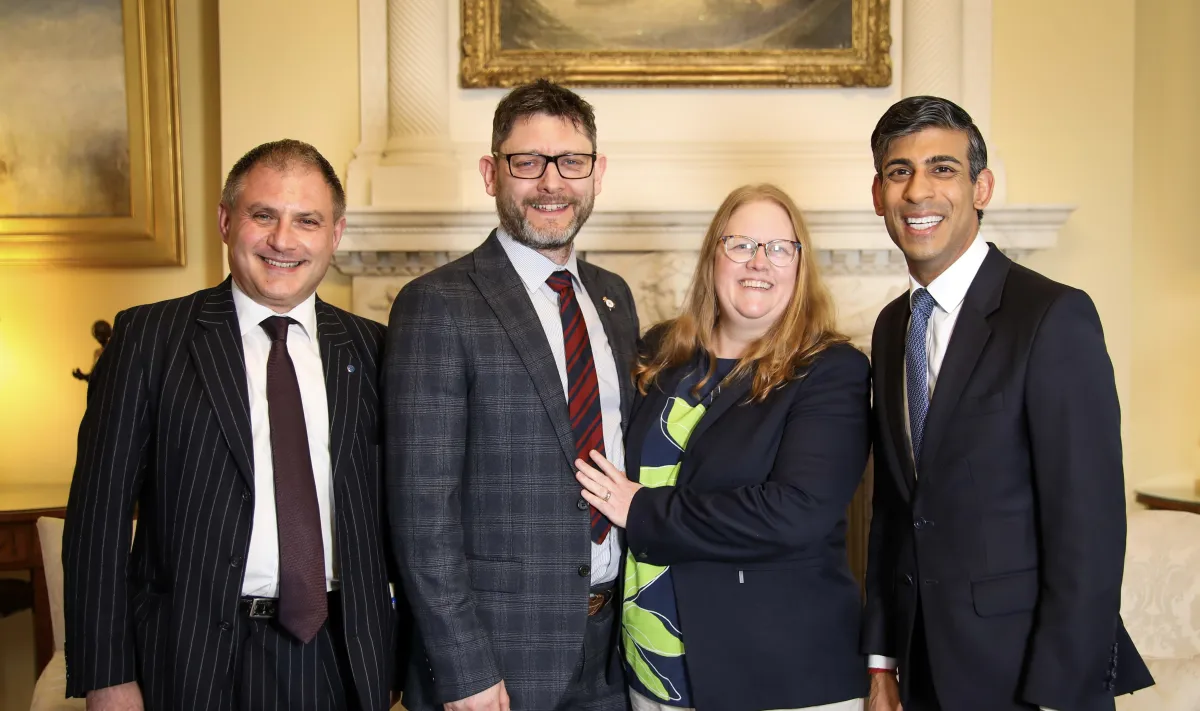
I talk the talk and walk the walk when it comes to social enterprise, from grass roots to engagement at the highest levels right up to Downing Street.
Neurodiversity in the workplace
Delivering practical workshops, interactive webinars and tailored team development sessions.
Lucy explores how embracing neurodiversity drives creativity, collaboration and wellbeing at work.
-Understanding the strengths and challenges of neurodivergent colleagues
-Practical adjustments and inclusive communication strategies for teams
-Building a culture where neurodivergent talent can thrive and contribute fully




What do other people say?
Don't take it from me, here is what others say about working with me.
Listen online
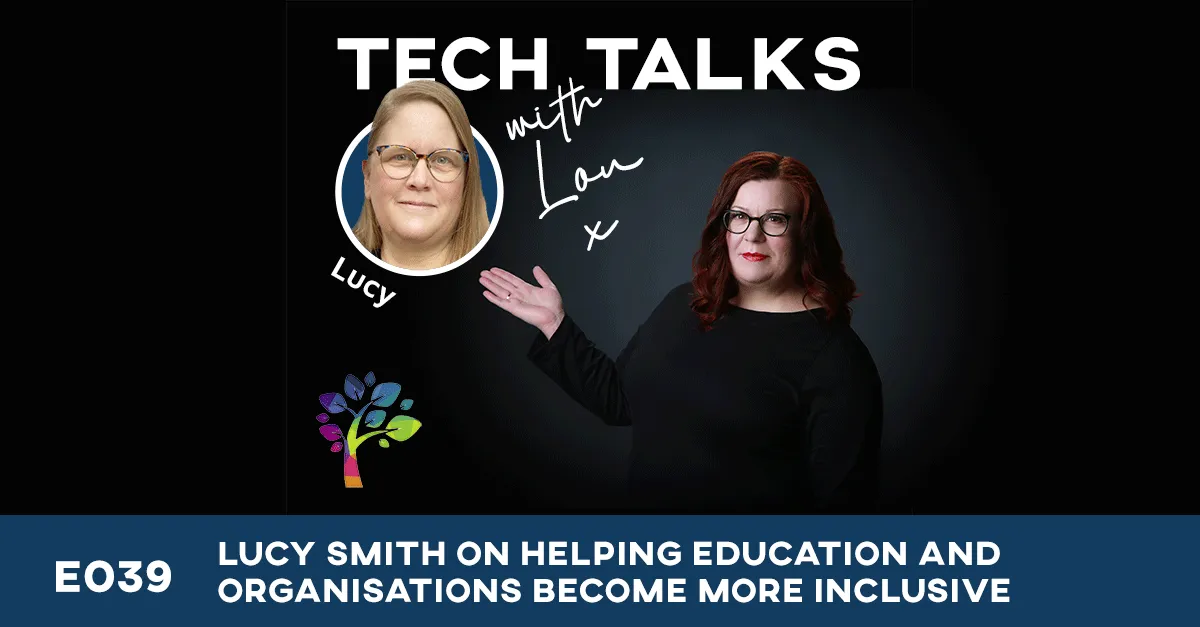
Podcasts, interviews and YouTube

Read more
The blog
Three Myths about disability discrimination
Three Myths Around Disability Discrimination That Are Holding Employers Back
There is a particular kind of paralysis that sets in when disability comes up in a performance conversation. I have seen it in management teams, in HR departments, and in one-to-one coaching sessions with leaders who genuinely want to do the right thing. They freeze. They avoid. They let situations drift that should have been addressed months ago, not because they are unkind, but because they are afraid.
The fear is understandable. Disability discrimination claims are uncapped in the Employment Tribunal. The case law can feel vast and unforgiving. And the messaging employers often receive is heavy on risk and light on reassurance.
But some of what passes for received wisdom in this space is simply wrong. And when myths go unchallenged, they cause real harm - to disabled employees who deserve honest conversations and proper support, and to organisations that tie themselves in knots trying to avoid a legal outcome they were never actually at risk of.
I get asked the same questions in training session with line managers and employers who want to do the right thing - that's exactly why they are in a training session with me.
I use case law in training sessions to explore where things have gone wrong for other organisations so here are three myths along with some helpful case law to demonstrate the points.
Myth One: "If an employee has a disability, you cannot performance manage them"
This is the myth that does the most damage in practice, because it quietly abandons the disabled employee at the moment they most need clarity and support.
The Equality Act 2010 does not protect disabled employees from performance management. It requires that performance management is applied fairly, with disability genuinely considered at every stage. Those are very different things.
The case law is consistent on this point. Tribunals do not penalise employers for managing performance - they penalise employers for doing so without considering whether the performance issue is connected to a disability, and without asking whether reasonable adjustments might change the picture. Where an employer has done that work honestly and documented it properly, the Tribunal's position tends to be straightforwardly supportive.
What Knightley v Chelsea and Westminster Hospital NHS Foundation Trust illustrated clearly is that even in a case involving a disabled employee with multiple periods of sickness absence, dismissal can be found fair and proportionate when the employer has followed a proper capability process, obtained Occupational Health advice, held regular review meetings, and genuinely explored what more could be done. The employee in that case had herself confirmed at an Occupational Health appointment that she did not foresee a return to work and that there were no steps the hospital could take to enable one. The Tribunal accepted that, in those circumstances, the dismissal was justified.
The lesson is not "never manage a disabled employee's performance." The lesson is: manage it properly, and document every step.
Myth Two: "Once an employee discloses a disability, we just have to do whatever they ask."
This one tends to produce the opposite problem - managers who agree to everything requested, implement nothing consistently, review nothing, and then wonder why they end up in Tribunal anyway.
The duty under the Equality Act 2010 is to take such steps as are reasonable in all the circumstances. Reasonableness is not defined by the employee's wish list. It is assessed against the nature of the role, the resources of the organisation, the likely effectiveness of the adjustment, and how much it would cost or disrupt the business to implement it.
An employee's preferred adjustment is a starting point for a conversation, not a binding instruction. What matters is that the conversation happens, that it is documented, that the employer genuinely explores what could remove or reduce the disadvantage the employee faces, and that the arrangements are revisited as circumstances change.
Martin v Swansea [UKEAT/0253/20/AT] is a useful illustration. The employee was absent due to stress-related ill health and was dismissed under the employer's absence management policy. The EAT dismissed the disability discrimination claim because the reasonable adjustments the employer had implemented - redeployment with protected pay, and active support in applying for alternative roles - were found to be sufficient to address the disadvantage. The employer had not agreed to everything requested. It had thought carefully about what was genuinely reasonable, done it, and recorded it.
The process of exploring adjustments, recording the conversations, keeping them under review, and being willing to return to the question as situations evolve, that is what the Equality Act 2010 actually asks for. Not unconditional agreement, but genuine, documented engagement.
Myth Three: "You simply cannot dismiss a disabled employee."
This myth is perhaps the starkest, and it produces the most damaging long-term consequences - for everyone involved.
When managers and HR teams believe that disability makes a person effectively un-dismissable, two things tend to happen. Either they attempt to engineer a situation that looks like something other than what it is - and Tribunals are very good at seeing through that - or they allow unsustainable situations to continue indefinitely, which is neither fair to the organisation nor, ultimately, to the employee.
Dismissal of a disabled employee can be lawful. The Equality Act 2010 does not prevent it. What it requires is that the employer can demonstrate they have genuinely exhausted all reasonable adjustments, properly explored whether alternative roles exist, followed a fair capability process, taken and considered Occupational Health advice, and given the employee a meaningful opportunity to respond at every stage.
The cases where employers have lost - and some of the awards have been extraordinary, running into millions of pounds - share a consistent pattern. Not a pattern of managing performance, but a pattern of either failing to consider disability at all, implementing adjustments inconsistently, or disguising a predetermined decision as a fair process. Barrow v Kellogg Brown & Root (UK) Ltd, in which a Tribunal called the dismissal process a sham and awarded over £2.5 million, is a stark example of what happens when the process is a pretence.
The question a Tribunal asks is not "was this person disabled?" It is "did this employer do everything that was reasonable before reaching this decision?" Where the honest answer to that second question is yes - and where the records exist to prove it - the employer's position is sound.
What this means in practice
The Equality Act 2010 was not designed to give disabled employees immunity from the normal expectations of employment. It was designed to ensure that disability is never used as a convenient excuse to manage someone out, and that adjustments are genuinely explored before any formal action is taken.
Done properly, performance management and disability law sit alongside each other without conflict. The employer who keeps thorough records, asks the right questions, holds regular conversations, applies policies consistently, and gives the employee a fair opportunity to respond at every stage - that employer has very little to fear from a Tribunal, and a great deal to offer the disabled employees who work for them.
The fear is understandable. But it should not be the thing that shapes your practice.
PS - If you are an HR professional, line manager, or business owner who wants to build confidence in this area, Inclusive Change offers training and tools that give you a structured, legally grounded framework for navigating these conversations. Get in touch to find out more.
Frequently Asked Questions
Can an employer performance manage a disabled employee?
Yes. The Equality Act 2010 does not shield disabled employees from performance management, it requires that it is applied fairly, with disability genuinely considered at every stage. Where an employer has explored reasonable adjustments, documented the process, and followed a fair procedure, they are on solid ground.
Do employers have to agree to every reasonable adjustment an employee asks for?
No. The duty is to make adjustments that are reasonable in all the circumstances, taking into account the size of the organisation, the nature of the role, and the likely effectiveness of the adjustment. An employee's preferred adjustment is a starting point for a conversation, not a binding instruction.
Can an employer legally dismiss a disabled employee?
Yes, in certain circumstances. Where an employer has genuinely exhausted all reasonable adjustments, followed a fair capability process, and given the employee a meaningful opportunity to respond, dismissal can be lawful. The Tribunal's question is not whether the employee was disabled, it is whether the employer did everything reasonable before reaching that decision.
What records should an employer keep when managing a disabled employee?
Documentation is everything. Keep notes of all health-related conversations, Occupational Health referrals and advice, details of adjustments considered and implemented, review meeting records, and copies of fit notes. If a case reaches a Tribunal, it will want to know what you knew, when you knew it, and what you did about it.
What is the difference between a reasonable adjustment and a special favour?
A reasonable adjustment has a specific legal basis under sections 20 and 21 of the Equality Act 2010. It is a proportionate step taken to remove a disadvantage - not preferential treatment. A later start time, adjusted targets, or a quieter workspace are not concessions that lower standards. They are measures that level the playing field so a disabled employee can do the job they were hired to do.

Some of the Companies Inclusive Change Have Worked With


Inclusive Change Ltd
The Brightwell, Bradbury House
Wheatfield Drive
Bradley Stoke, Bristol
BS329DB
Reg no: 12412464
Copyright 2023 - Inclusive Change Ltd
VAT NO: 352 1564 17
ICO Reg: ZB081779
UK Register of Learning Providers: 10090652
Column Header
Lorem ipsum dolor sit amet consecetuer lorem ipsum
Organically grow the holistic world view of disruptive innovation
At the end of the day, going forward, a new normal that has evolved
Column Header
Lorem ipsum dolor sit amet consecetuer lorem ipsum
Organically grow the holistic world view of disruptive innovation
At the end of the day, going forward, a new normal that has evolved
Column Header
Lorem ipsum dolor sit amet consecetuer lorem ipsum
Organically grow the holistic world view of disruptive innovation
At the end of the day, going forward, a new normal that has evolved