
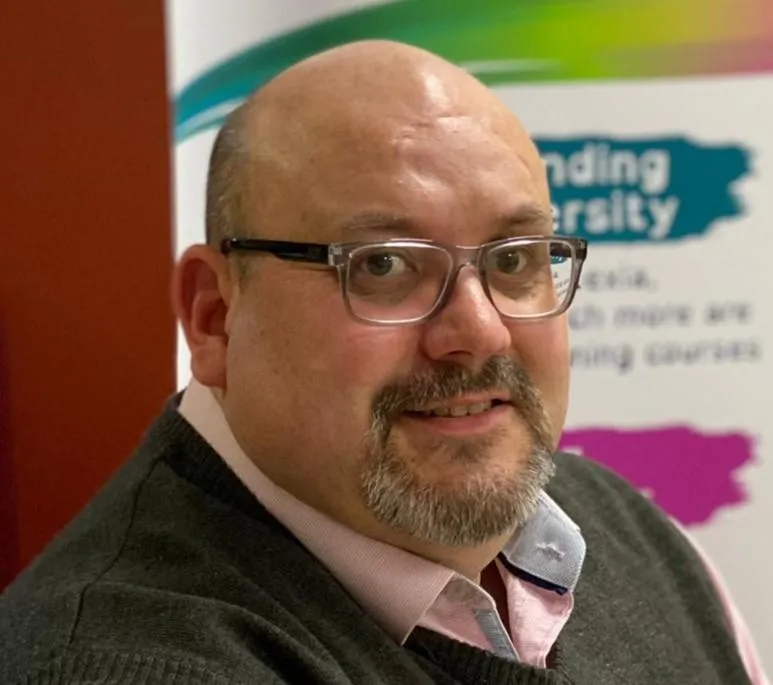
Daniel Biddle
Motivational Speaker, Disability Law Expert
Empowering Neurodiversity in the workplace
Daniel Biddle
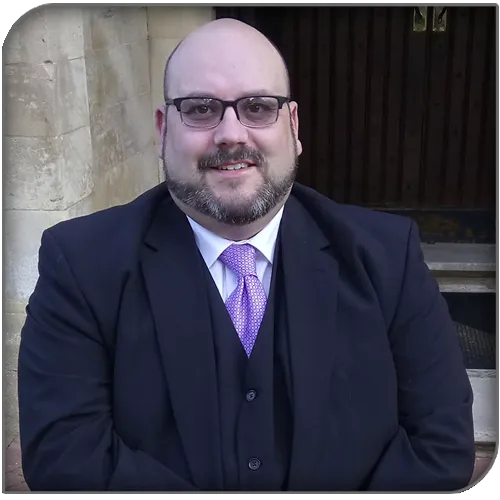
Daniel is a highly experienced accessibility consultant with extensive experience of disability. Daniel has particular expertise in acquired disability, including acquired neurodiversity.
He established the National Disability Employment & Advisory Service in 2022 and focuses on supporting neurodivergent young people & adults into employment.
Work with me
Ready to transform your understanding of disability law and equity in the workplace?
Would you like me to run a workshop for you? Contact me through Inclusive Change using the calendar below.
Read my blog here
Read more
The blog
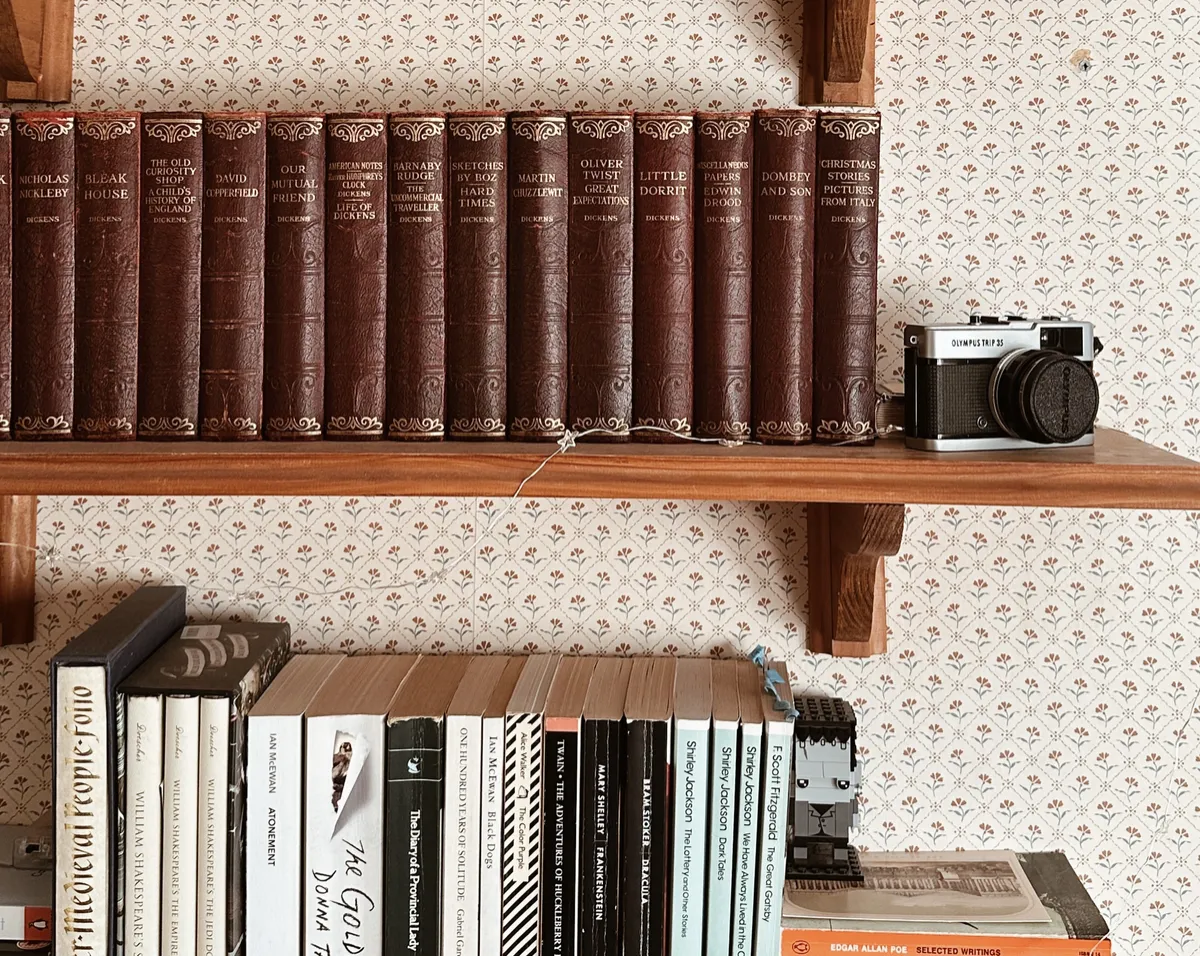
The Life-Changing Magic of Reading a Good Book
Sorry Miss Kondo, I stole your title.
I love books. I really, really, really love books. If it were feasible, I would spend every hour of my day reading books - which I have done a few times, and I would highly recommend it. But for a while, the extent of my reading material was video game dialogue.
Growing up, I was an avid bookworm, chewing down book after book, until one day - almost out of nowhere - I stopped reading altogether. Suddenly all of my mental faculties were exhausted simply trying to survive every day with a mind hell-bent on its own destruction: Do you think I had any energy left over to open an actual book?
Then, a few years ago, I completely deleted all social media accounts and I felt such immense freedom. Untethered, I had the energy I needed to pick up old hobbies.
One such hobby I returned to was reading.
After an autism diagnosis, years of therapy and support in finding a path through education that worked for me, I was finally in a good place to revisit my local library - plus, I needed something to fill the time I gained after deleting social media.
Once again, I was digesting literature at an alarmingly fast rate, working my way through roughly two books a week. Initially, I dusted off childhood favourites, catching up with familiar friends in Narnia, Hogwarts and Panem, but it wasn’t long before I fell in love with classics: enchanted by both their hypnotic writing and the history that they connect us with.
In my own personal life, literature provided a balm in my journey through mental health recovery. After spending my adolescence trapped in my bedroom, books - in particular, fiction - created a way for me to experience new worlds, meet new people and hear about new perspectives. Ironically, this escapism helped me to find beauty in my own reality.
It’s because of this that I believe that books have the power to change the world.
Maybe this post can encourage you to seek out a bit of that power for yourself.
'Tell Me About a Complicated Man...'
The world would likely be a nicer place if we could all take the time to understand each other a little bit better.
Unfortunately, it is currently impossible to crawl into another person’s brain and experience the inner-workings of their mind - however if you are reading this from the far future, or perhaps a parallel universe where such a thing is now possible, please ignore this sentence.
Sadly, it seems many people find it difficult to sympathise with others without having shared experiences. Too often, we focus so intently on what separates us it makes it easy to view our struggle as their malignity.
People can be complex. Our own actions, emotions and desires can be confusing to ourselves, let alone others, making it that much harder to place yourself in another’s shoes.
Luckily for us though, stories exist.
For millennia, humans have been using storytelling as a means of passing down wisdom or advice. The stories we hear and tell shape how we see ourselves and the world around us.
Books are just another medium for that magic.
Reading of the lives and thoughts of others - fictional or not - grants us the rare opportunity to truly put ourselves in another person’s shoes as we experience the happenings of a novel through our narrator’s eyes - which can be entirely different to our own.
This can help us to place ourselves in positions we may never find ourselves in: the well-to-do financial consultant can lie down upon the bed of the homeless; the son can feel the compassion of the mother; the school-teacher can flee war-torn countries alongside the refugee.
Whilst, obviously, books can never replicate the true reality, joy and pain of others, they can provide us a window - an outsider’s glimpse - into that which others face, strengthening our understanding of those around us.
It will come at no surprise that studies have demonstrated links between the act of reading fiction for pleasure and the development of empathy.
And, I think a even just little bit more empathy in our everyday can go a long way.
Just One Spark
Literature is also such a wonderful instructor in creativity.
Fiction, particularly, is thought to improve imagination - which can positively impact abstract-thinking, problem-solving and how we visualise our future. That’s not even mentioning the joyful emotive fire struck when your imagination sparks. That fire can prompt creativity and provide inspiration for those endeavours: the books I engage with often inform my artistic ideas.
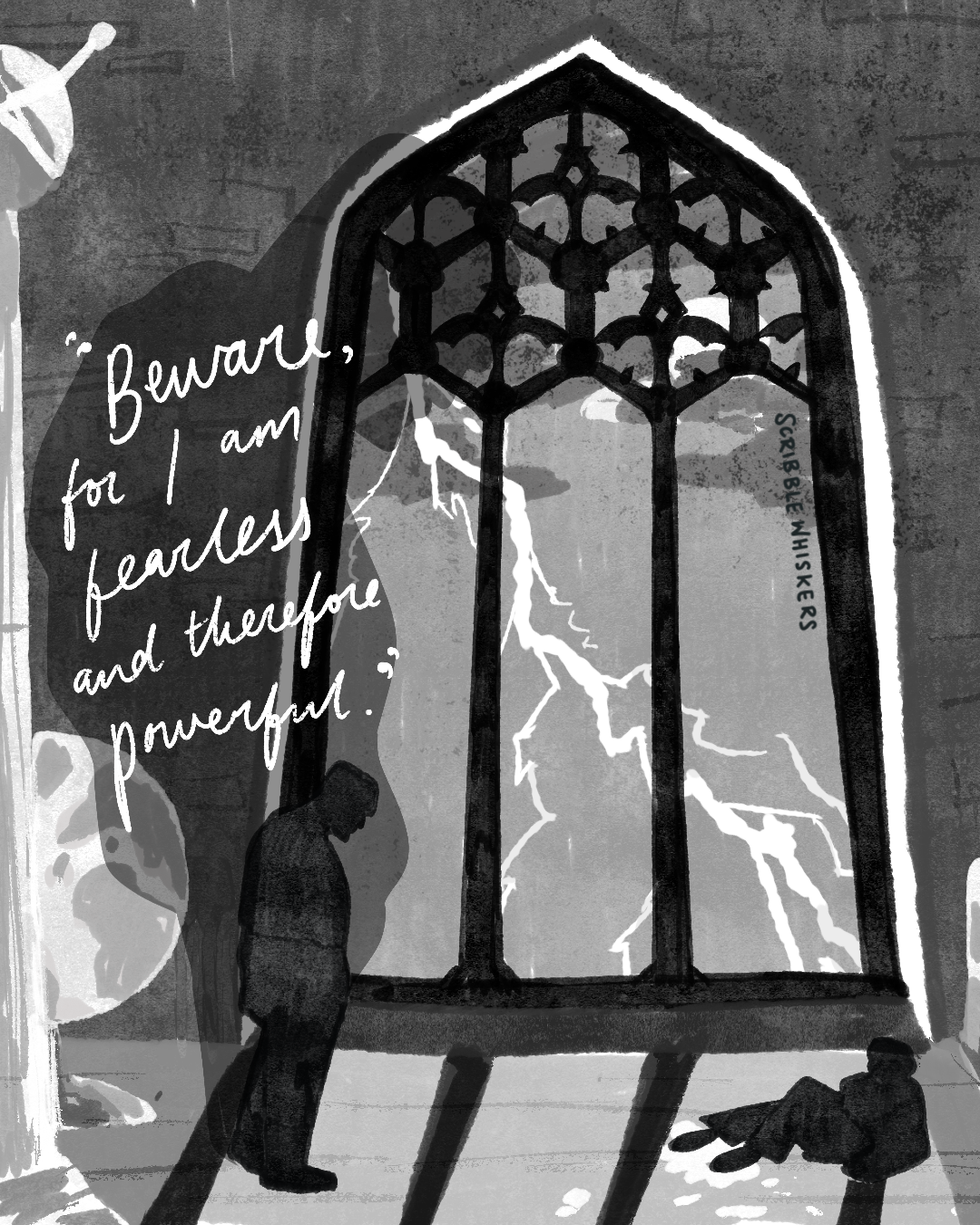
Personal illustration based off of Mary Shelley’s, Frankenstein
Although, observing any form of art has the option to set that spark alight, not just books. Despite that, I think that the richness in emotion and description that can be achieved in slowly chewing over a good novel, is unlike anything else.
Linked to reading, writing in any form can be a brilliant creative outlet; and can be especially cathartic when words are difficult.
Literary Medicine
Reading for pleasure is a fantastic tool for cultivating personal wellbeing.
Curling up with a good book provides you with an extended moment of stillness, away from the everyday stresses and never-ending to-do lists - a moment where you can pour into your own cup for a change.
The intellectual stimulation brought on by reading is fantastic for keeping your brain active and challenging you to think in new ways, and reading has also been shown to improve emotional intelligence - something that can aid our understanding of our own emotions, but also those of others, as well. Books can also bring people together through avenues like that of the humble book club (or even just a small conversation with a friend about the book you just finished), which can help build community and tackle feelings of loneliness.
As I mentioned earlier, literature was a huge comfort to me as I journeyed (and continue to journey) through my own mental health recovery.
Escapism played a large role in that: immersing myself in grand fictional worlds helped the walls of my bedroom feel less stifling, and huddling up in bed alongside my favourite characters helped me feel less alone.
But reading of characters - and their writers - who dealt with similar struggles as ourselves can also reduce the inherent internal isolation that mental illness can bring. Comfort comes in knowing that someone centuries ago can put directly into words the exact tremors of your heart today.
It is difficult to describe the appetite I developed for Shirley Jackson after reading We Have Always Lived in the Castle for the first time as an autistic, agoraphobic teenage girl.
In my lowest moments, reading of the simple universal wonders of life, like that of a beautiful flower - a charm unchanged by history - helps me to find even the smallest pockets of delight where I otherwise would not look, because…
‘life is rich and full here… everywhere… if we can only learn how to open our whole hearts to its richness and fullness.’ Anne of Avonlea, L. M. Montgomery
To expand on how my own life has been affected by my love of books even further, when I was working to overcome agoraphobia, I started by using my local library as a form of exposure therapy.
Only a 10-minute walk from my house, it wasn’t an overwhelming task to set myself, but it remained challenging enough to work. It provided an incentive to get out of the house (stacks of new books to read) and external deadlines to keep me consistent (the need to return said stacks to make room for more).
Eventually, with enough time, the once panic-inducing journey shifted into something easier, something enjoyable, even - my breath didn’t escape me, my body didn’t shake quite so much, and my thoughts became less panic-stricken.
After a few months, I began to stretch my library trips: walking further, taking different routes and then working up to sitting in the cafe next door with a drink (ordered independently!).
Whilst this may not seem like a big step to those unaware of how suffocating agoraphobia can be, as someone who was unable to step outside of the front door without trembling hands and bated breath, spending 30 minutes - alone - in a public space was a pretty big deal.
I think this is partly why I adore libraries so much. Not only do they provide free reading resources, they bring together communities, create (mostly) accessible safe-spaces, and open up worlds - both fictional, and in many cases, physical.
Reading is powerful. It can improve your attention span, empathy, emotional intelligence, mental wellbeing, creativity - but, better than all of that, it’s fun!
If you find the thought of reading daunting, start with something small, Dostoyevsky can wait. Read 10 minutes of light fiction before bed, listen to an audiobook on your commute, set aside 5 minutes to pour over poetry during lunch: anything, so long as it lets you access the magic books have to offer.
The most important thing is to find the kind of literature you find most enjoyable.
What I have read has narrated every season of my life for the past six years: wisdom has been imparted, reality has been escaped, and many paperback spines have been broken in-between (sorry).
Books have changed my life, and I hope that you may allow them to change yours as well.
Quick note before I close this blog… I’m now at University! Studying English, of course…
Thank you as always for reading my self-indulgent ramblings, and I’m sure I will keep this blog updated with goings on throughout this next chapter of my life, although expect posts to slow down even more than they have.
Settling into uni is hard, but especially so as an autistic student who couldn’t access mainstream education because of the funky ways in which my brain works. After taking some more time to get my bearings, I hope to write a bit about the whole experience, so remember to look out for that in coming months.
Yours sincerely,
Owen @ ScribbleWhiskers
'Love does no harm to a neighbour. Therefore love is the fulfilment of the law.'
Romans 13:20, NIV

Column Header
Lorem ipsum dolor sit amet consecetuer lorem ipsum
Organically grow the holistic world view of disruptive innovation
At the end of the day, going forward, a new normal that has evolved
Column Header
Lorem ipsum dolor sit amet consecetuer lorem ipsum
Organically grow the holistic world view of disruptive innovation
At the end of the day, going forward, a new normal that has evolved
Column Header
Lorem ipsum dolor sit amet consecetuer lorem ipsum
Organically grow the holistic world view of disruptive innovation
At the end of the day, going forward, a new normal that has evolved
Some of the Organisations Inclusive Change Have Worked With


Inclusive Change Ltd
The Brightwell, Bradbury House
Wheatfield Drive
Bradley Stoke, Bristol
BS329DB
VAT NO: 352 1564 17
ICO Reg: ZB081779
UK Register of Learning Providers: 10090652
Copyright 2025 - Inclusive Change Ltd