The Rise of the Sandwich Carer
The rise of the sandwich carer - and what it means for the future of work
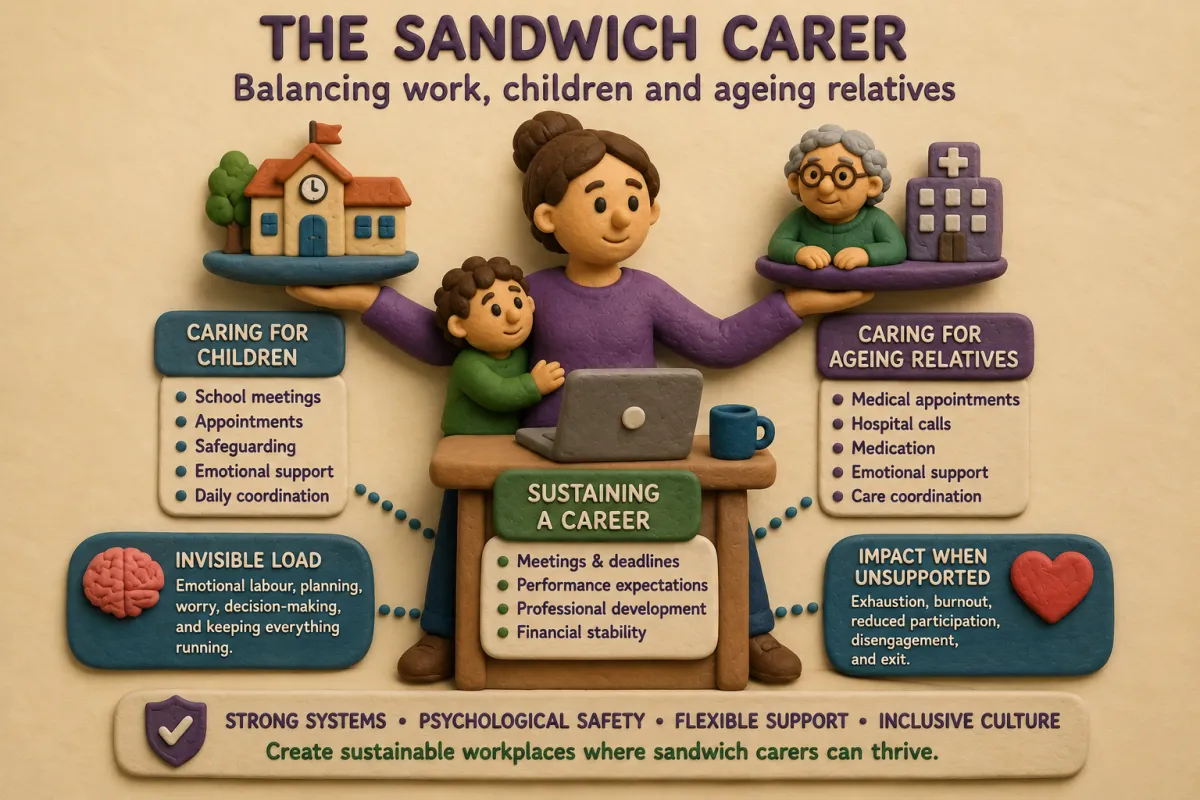
One of the strongest conversations emerging from our Supporting Parents Lunch and Learn was around something many attendees had never heard named before: the sandwich carer.
The term describes people who are simultaneously caring for children - often neurodivergent young adults - and ageing or unwell relatives, while also trying to sustain a career. It is not a niche experience. And once you start looking for it, you see it everywhere.
What sandwich caring actually involves
People managing school meetings during their lunch break. Hospital calls between back-to-back meetings. Safeguarding concerns that land before 9am. Care coordination that runs late into the evening. Emotional labour that never fully pauses.
Many are exhausted before the working day even begins. And then they show up -reliably, professionally, often without saying a word about what they carried to get there, because the alternative is to lose the income, the structure, or the sense of self that work provides.
Workplaces, meanwhile, still largely operate around assumptions built for a different era, one where caring responsibilities were distributed differently, community support structures were stronger, and awareness of neurodiversity was significantly lower. Modern life looks very different. But many workplace systems have not caught up.
The patterns organisations are failing to read
Systems thinking asks us to look below the surface event, the resignation and the absence, and ask: what patterns have been building underneath? For sandwich carers, those patterns are often hiding in plain sight. Consistent turnover among employees in their thirties and forties. Reduced participation in people who used to lead conversations. Repeated short-term absences that HR labels 'unrelated' because nobody has connected the dots.
These are not individual failures. They are systemic signals. And organisations that are not actively looking for them will not find them - not because the data is not there, but because the mental model ('this is a personal matter') stops people asking the right questions.
Framework note: patterns and mental models
Burnout in sandwich carers can present as disengagement, reduced confidence, or withdrawal. Organisations misread these as performance issues because the mental model ('caring is private') prevents them from seeing the real pattern underneath.
What organisations misread
Burnout in sandwich carers can present in ways that organisations routinely misinterpret. Reduced confidence. Emotional fatigue. Withdrawal from conversations they used to lead. Lower participation. Forgetfulness in people who are usually sharp.
Underneath that may simply be sustained overload. Not lack of ambition. Not disengagement. Not a performance issue. Just human limits, reached quietly over time. The risk of misreading this is significant. Organisations that respond with performance management processes, or that frame the issue as a personal resilience problem, often accelerate exit. They lose highly skilled, deeply experienced people - not because those people could not do the job, but because the system around them was not designed for the life they were actually living.
The bigger strategic picture
The future of work conversation in most boardrooms focuses on AI, digital transformation, automation, and productivity. These are genuinely important. But one of the most significant strategic questions organisations face is quieter and more human:
"Can human beings sustainably continue operating inside the systems we are building?"
The UK's working carer population is substantial and growing. The combination of rising neurodivergence identification, an ageing population, reduced public sector capacity, and stagnant wage growth is creating a convergence that employers are only beginning to reckon with. Organisations that recognise this now and build structures that reflect it, will be better placed to retain the people they need.
Supporting sandwich carers is workforce sustainability
This is not simply compassionate leadership, though compassionate leadership matters. Supporting sandwich carers is a workforce sustainability issue. The people navigating these pressures are often the most resilient, most adaptable, most experienced members of a team. They have had to become excellent at problem-solving, at managing complexity, at holding multiple things at once. Those are not small skills.
The question is whether workplaces are designed to retain them, or whether they quietly push them out and then wonder where all their institutional knowledge went.
P.S.
If your organisation is starting to have these conversations — or needs help knowing where to begin — Inclusive Change offers consultancy, training, and mentoring specifically designed for organisations navigating neurodiversity, caring responsibilities, and sustainable workforce design. Get in touch at [email protected].