Leading Change Without Leaving People Behind
Leading Change Without Leaving People Behind
Change is now a constant feature of working life.
New technology. Restructures. New leadership. AI. Hybrid working. Mergers. New systems. Changing roles and responsibilities.
For organisations, the business case for change may be clear. There is a strategy, a timeline and an outcome everyone is working towards.
But there is another side to organisational change that can be much harder to plan for:
People don't experience change in the same way.
One employee may hear about a new system and immediately want to explore it. Another may be thinking about everything they have only just learnt about the old one.
One person may be excited by a restructure. Someone else may immediately wonder what it means for their role, relationships or routines.
Neither response is necessarily right or wrong.
For leaders and managers, understanding these differences can be the difference between simply managing change and successfully leading people through change.
Why do people respond differently to workplace change?

Resistance to change is often talked about as though it is a personality trait.
"They just don't like change."
But people's responses are usually more complicated than that.
Previous experiences, confidence, communication preferences, workload, trust in leadership, individual circumstances and how much information someone has been given can all affect their response to workplace change.
There may also be very practical questions sitting underneath someone's reaction:
What does this mean for me?
What am I expected to do differently?
When is it happening?
Will I still be able to do my job well?
What happens next?
If those questions remain unanswered, uncertainty can quickly fill the gaps.
That's why effective change management communication isn't simply about announcing what is changing.
People also need to understand what the change means in practice.
Communication is one of the biggest parts of leading change
Leaders usually know far more about an organisational change than the people experiencing it.
They may have spent weeks or months discussing the options, considering risks and gradually becoming familiar with the new direction.
Employees can receive the outcome of all that thinking in a 30-minute meeting.
Then we wonder why they haven't caught up.
One of the simplest principles of leading change effectively is remembering that the organisation's timeline and an individual's processing timeline aren't necessarily the same thing.
Good communication during change means providing clarity about what you know while being equally clear about what you don't yet know.
It means repeating important information rather than assuming that saying something once means everyone has understood it.
And it means giving people opportunities to ask questions in different ways.
Not everybody is comfortable putting their hand up in a large meeting and immediately articulating a question about something they have only just heard.
Where does neurodiversity fit into change management?
This is where understanding neurodiversity in the workplace can give leaders another useful perspective.
Neurodivergent employees aren't one group who will all respond to change in the same way.
However, some aspects of workplace change can create additional barriers for some people.
Changes to established routines, ambiguous communication, unexpected announcements, new environments, shifting expectations or being asked to process a large amount of information quickly may be particularly difficult for some neurodivergent colleagues.
That doesn't mean neurodivergent employees can't cope with change.
And the answer certainly isn't to avoid change.
It means recognising that how we lead change matters.
Interestingly, many of the approaches that can support neurodivergent colleagues are simply examples of good change leadership.
Clear communication.
Advance information where possible.
Defined expectations.
Opportunities to ask questions.
Written information alongside verbal communication.
Time to process.
Clear next steps.
None of those things lower expectations.
They make expectations easier to understand.
And they can benefit a much wider range of employees.
Inclusive change doesn't mean keeping everyone happy
This distinction is important.
Inclusive change management isn't about removing uncertainty, avoiding difficult decisions or trying to make everyone happy.
Sometimes leaders have to make decisions employees won't like.
Sometimes change has to happen quickly.
Sometimes all the answers simply aren't available yet.
Inclusive leadership is about considering how people will experience that change and removing unnecessary barriers where you reasonably can.
Small changes in leadership can have a big impact
When organisations are undergoing significant change, it is tempting to focus on significant interventions.
But people's everyday experience of change is often shaped by much smaller interactions.
A manager checking understanding rather than assuming it.
An email summarising what was agreed after a meeting.
A clear deadline instead of "as soon as possible".
Explaining what is not changing as well as what is.
Giving someone time to consider a question before expecting an answer.
Telling employees when they can expect another update – even if there is nothing new to tell them yet.
These aren't complicated change management strategies.
They're thoughtful leadership behaviours.
And collectively, they can influence trust, engagement and people's ability to continue doing their jobs while change is happening around them.
Are you managing change or leading people through it?
Plans, processes and project timelines matter.
But organisations don't experience change.
People do.
And those people bring different experiences, communication preferences, working styles, strengths and needs with them.
The challenge for leaders isn't to create a change process where everyone reacts in exactly the same way.
It's to create enough clarity, communication and confidence for different people to understand what is happening and move forward.
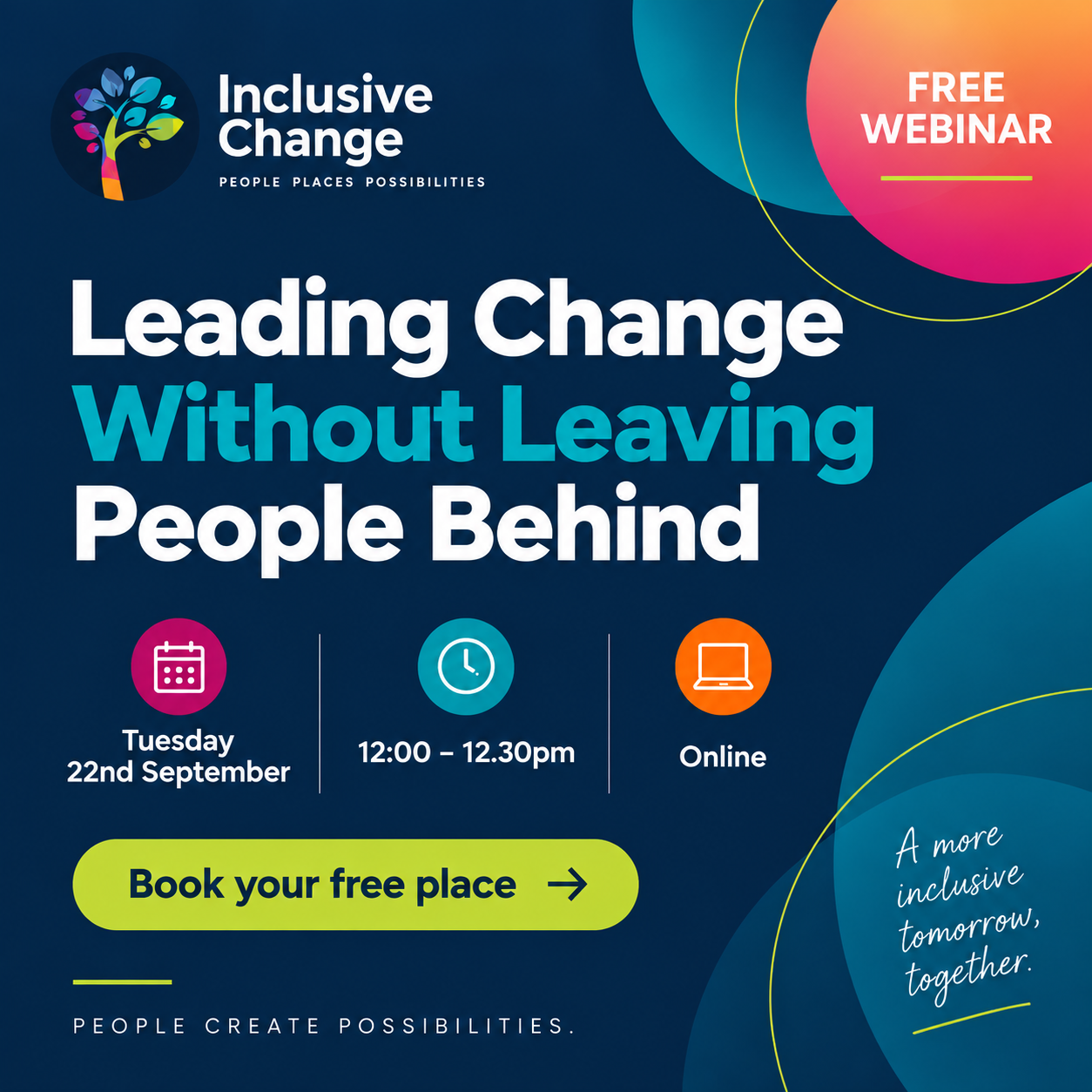
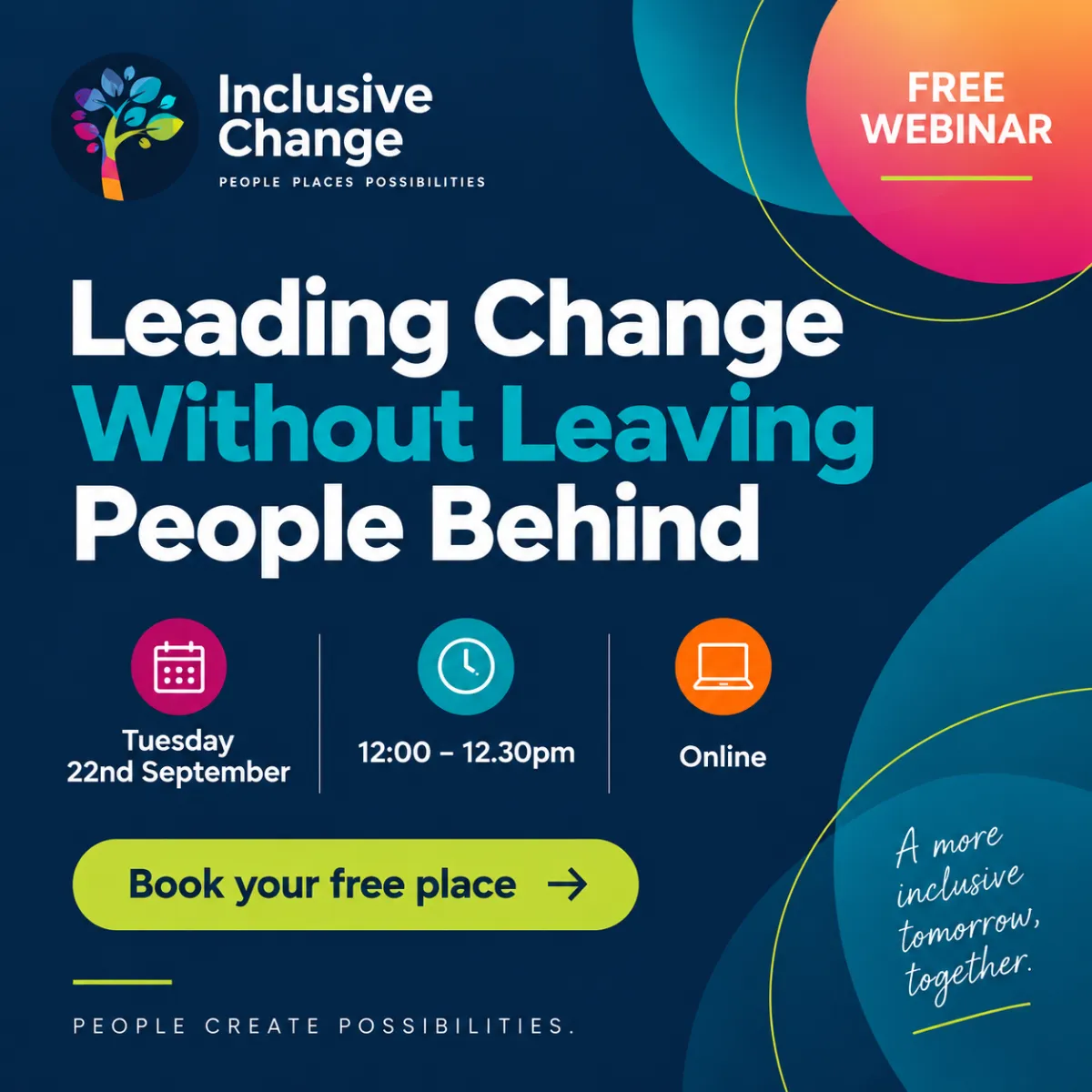
That's what we'll be exploring in the first webinar in our FREE Leading Inclusive Change webinar series.
Leading Change Without Leaving People Behind
Tuesday 22 September 2026 | 12:00–12:30pm | Online | FREE
In this practical 30-minute webinar, we'll explore how people experience workplace change differently and what leaders and managers can do to communicate more effectively, reduce unnecessary barriers and keep people engaged through uncertainty.
We'll also consider neurodiversity as one part of the wider picture and look at what different ways of processing, communicating and responding to change can teach us about better inclusive change leadership.
This isn't about removing change or trying to keep everyone happy.
It's about leading change well.
Understanding your people. Communicating with greater clarity. And recognising where relatively small changes in approach can have a meaningful impact.
Explore the FREE Leading Inclusive Change webinar series and book your place