
Neurodiversity-Informed
Mentoring for
Young Adults
Practical one-to-one mentoring for autistic, ADHD and other neurodivergent young adults building confidence, independence and guidance towards their next steps
HOW IT WORKS
Your Mentoring Journey
Our mentoring processes are designed to give neurodivergent young adults practical support,
confidence and tools for moving forward - at a pace that works for you
1.
Start with a conversation
We'll begin with a relaxed introductory chat to understand what support you're looking for and whether mentoring feels like the right fit
2.
Meet your mentor
We'll match you with a mentor who understands neurodiversity and can support you with your goals, challenges and next steps.
3.
Create your plan
Together, you'll identify what matters to you and create practical goals around confidence, independence, education or employment
4.
Move forward
Through regular sessions, we'll help you build skills, recognise your strengths and take steps towards your future
WHO IT'S FOR
Mentoring for neurodivergent young adults who want support to move forward
Our mentoring is designed for young adults who are looking for practical, personalised support with education, employment, confidence and independence
Finding your next step
You might be unsure about what comes next after school, college, university or a change in circumstances
Building Confidence
You may want support understanding your strengths, recognising your achievements and feeling more confident in yourself
Preparing for work
We can support you with workplace skills, applications, interviews and understanding what helps you succeed
Developing independance
Mentoring can help you build practical skills, problem-solving strategies and confidence for everyday life
Understanding yourself
We can help you explore your neurodivergence, identify your needs and find strategies that work for you
Having someone in your corner
Sometimes having a consistent person who listens and understands can make all the difference
GET MORE INFORMATION
Download our mentoring prospectus
Explore our services - find out if mentoring is the right fit for you.
Mentoring
FAQ's
Who is this mentoring for?
Our mentoring is for neurodivergent young adults (typically aged 18–25 years) who want practical, supportive guidance with work, education, confidence, or life skills. You don’t need a formal diagnosis to take part.
What does mentoring actually involve?
Mentoring sessions are one-to-one and tailored to the individual. This might include goal setting, building confidence, exploring career options, developing self-advocacy skills, or working through specific challenges. Sessions are shaped around what you want to focus on.
Do I need to know what I want to do already?
Not at all. Many people come to mentoring because they don’t know what their next step is. Part of the process is exploring options together and figuring out what feels right for you.
Is this therapy?
No, mentoring is not therapy. Our mentors provide practical, strengths-based support and guidance, focusing on skills, confidence, and next steps. If someone needs therapeutic or clinical support, we’ll always encourage them to access appropriate services alongside mentoring.
How are the sessions delivered?
Sessions can be delivered online or in person (where available). We aim to be flexible and accessible, and we’ll work with you to find a format that feels comfortable and supportive.
How long are the sessions?
Depending on your goals and what you would like to achieve. This is self lead and can start from one hour a week.
What if I feel anxious or unsure about starting?
That’s completely okay. Feeling nervous is very common. We take things at your pace, explain what to expect, and create a calm, supportive environment. There’s no pressure to share anything you’re not ready to.
Do parents, carers or supporters need to be involved?
That’s up to you. Some young people prefer mentoring to be completely one-to-one, while others like a parent, carer, or supporter to be involved at certain points. We’ll always centre the young person’s preferences.
Will what I share in mentoring be kept confidential?
Yes. What you share in mentoring sessions is treated as confidential and handled with care and respect. This means we won’t share information about you with anyone else without your consent.
The only exception would be if we’re concerned about your safety or the safety of others. In those situations, we may need to share relevant information with appropriate people or services, but we would always aim to talk to you about this first and involve you wherever possible.
How do I get started?
You can book a free initial call using the button at the top of this page. This is a relaxed conversation to see if mentoring feels like the right fit and to answer any questions you might have. We can discuss costs and times, depending on your goals.
If you have some questions before booking a call, you can email Holly or Becca at [email protected]
IMPACT
Some of our Mentee Successes


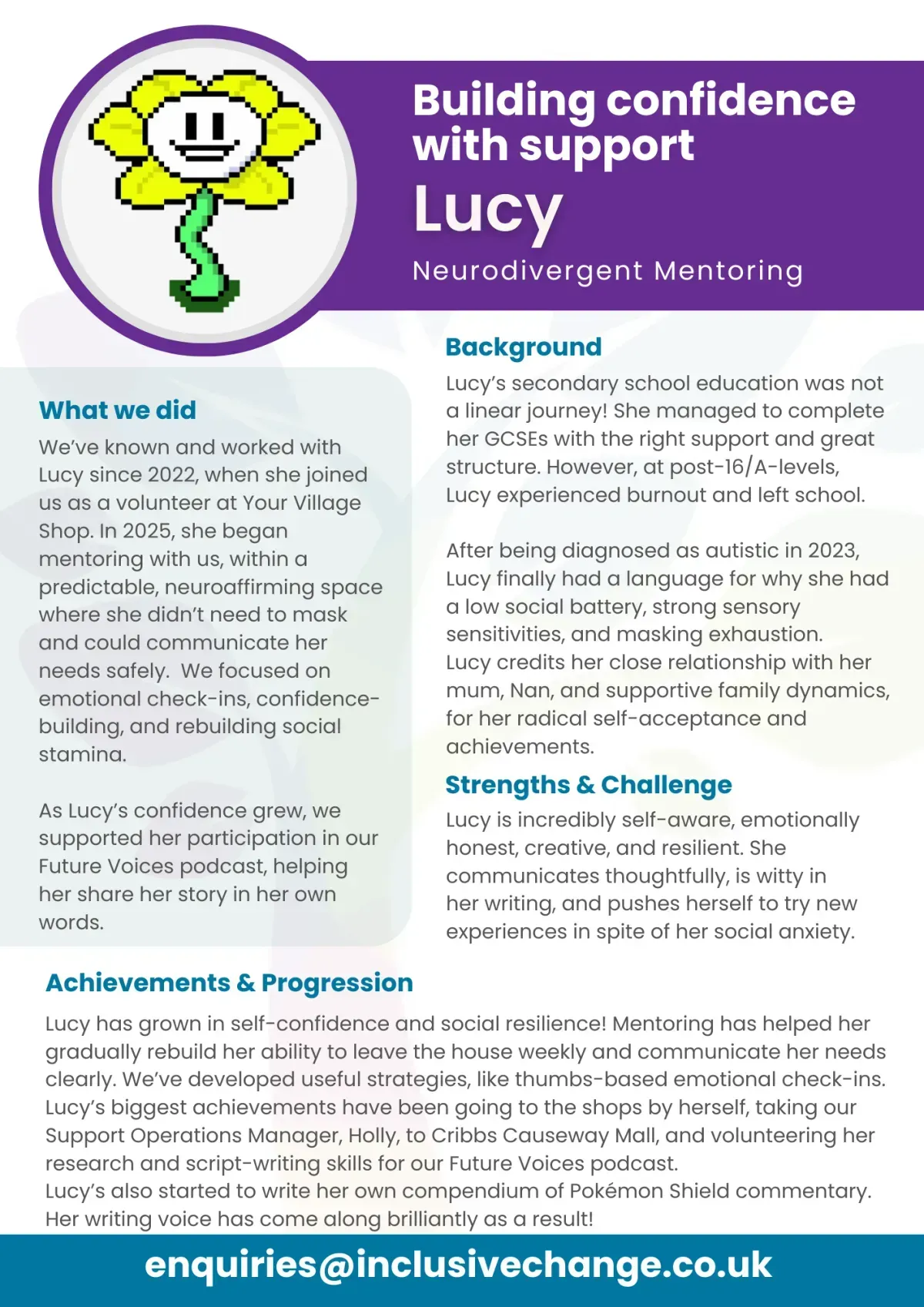

CASE STUDY
Empowering Neurodivergent Young People: Lucy's Journey to Confidence
In this episode of our Start the Conversation podcast, mentor Becca discusses Lucy's journey as a neurodivergent young adult. Lucy shares her experiences with anxiety, autistic burnout, and rebuilding confidence after leaving education.
Through their conversation, we see how mentoring can provide tailored guidance, encouragement, and practical support, helping young people navigate challenges and celebrate small but meaningful achievements - like going to the shop alone.
Lucy’s story demonstrates the power of consistent, understanding mentorship in fostering growth, resilience, and confidence, offering valuable insights for young adults, parents, carers, and professionals interested in neurodivergent-informed support.


Inclusive Change
Change management and
future of work consultancy.
Bristol-based, working across
the UK.
FOR ORGANISATIONS
FOR LEADERS & mANAGERS
Workplace Needs Adjustments
FOR INDIVIDUALS
Mentoring
Coaching
Support Worker
Access to Work
© 2026 Inclusive Change Ltd. All rights reserved.