Thank you for helping to
Keep the conversation going
Here are some ways we can help you.
We hope you enjoyed The Castle Conference: Digital Wellbeing for Young People.
We know you want to keep the conversation going so we have created a page to help you do that.
The page will be updated with slides and videos when they are available.
Digital Safety Training & Consultancy
Digital Safety can provide a range of training services and consultancy. From one cyber security for non-profits to training for parents in your community.

Inclusive Change Support and Training
Want to know more about neurodiversity in your community? We can help: from unlocking the potential in your teams to deepening awareness of safeguarding vulnerable people.
Watch the Castle Conference Catch Up
We hope that The Castle Conference inspired you, got you thinking and talking about the topic of Digital Wellbeing. We really hope you have been talking about the conference to your friends, family and colleagues.
We certainly are and we arranged it!
The Castle Conference Catch-Up was a chance to keep talking, a chance to share your thoughts, a chance to find out what questions we have been asked since the day and a chance to ask us new questions.
Andy & Lucy
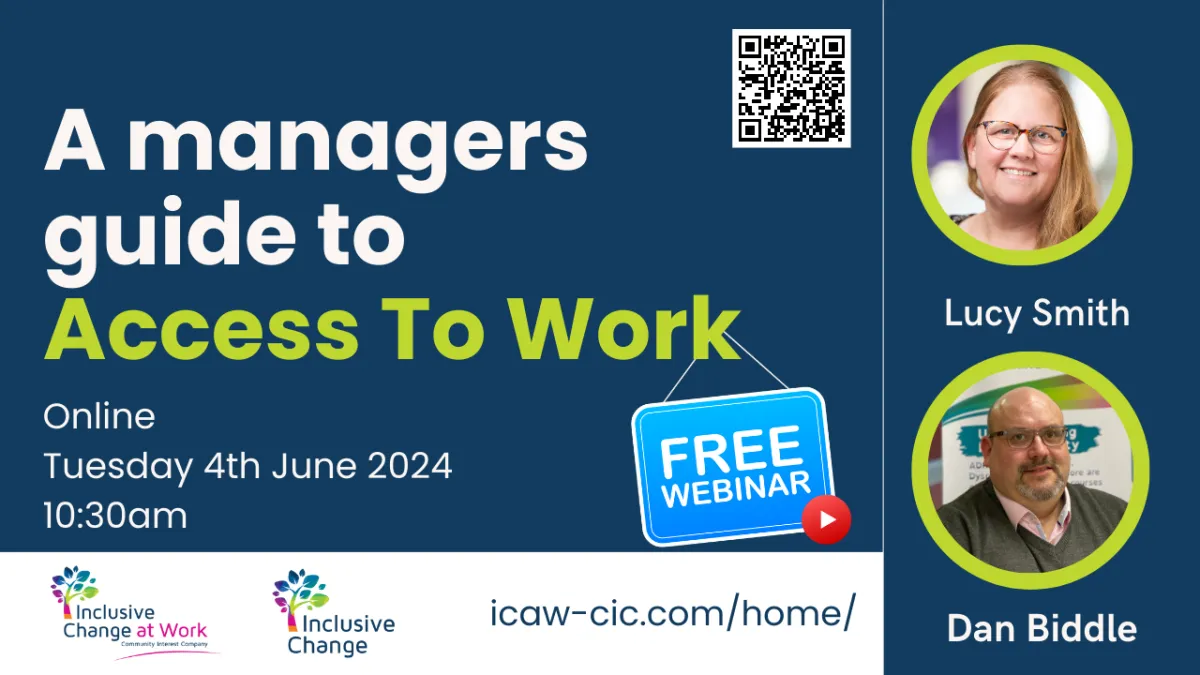
4th June 2024
Free Webinar
Join Lucy & Dan from Inclusive Change At Work CIC who will be discussing how to support disabled and neurodivergent employees to thrive at work.
Recap from the event
We have combined the slides into a video for you to rewatch
This is only the slides - no audio. Videos will be uploaded soon.
Speaker Videos
We will be uploading videos from The Castle Conference as soon as they are available.
COMING SOON!
Resources
Links and downloads for you
Watch or listen online to our podcasts

Spotify Podcast
Listen to our speakers and exhibitors
Does Neurodiversity Awareness Training Actually Work?
So, what has neurodiversity training actually done for us since 2020?
TL;DR: (if life is too short to read stuff, thats cool, just read this).
Neurodiversity awareness training hasn't closed the workplace disclosure gap - a 2026 study of 357 employees found it made no measurable difference to psychological safety. What actually helps: senior leaders disclosing their own neurodivergence, and managers who lead and communicate well by default, without anyone needing to raise a hand first. Awareness training still matters for compliance and understanding, but it was never the whole job.
I have a lot of conversations about this
I had another conversation this week with a team who are, by any measure, highly neurodivergent. Most of them know it. Almost none of them have said it out loud at work. Some are burnt out, struggling to communicate with each other, and quietly avoiding the very conversation that might help them.
This is not an unusual team. It is most teams I work with now.
So here is the question I keep thinking about. Since 2020, neurodiversity awareness training has become a fixture of corporate life. Policies have been written, lunch and learns delivered, awareness weeks calendared in. Five years is long enough to expect a trend. So has it worked?
I want to say yes. I have delivered a lot of it myself, and I still believe in every session I delivered. But the honest answer, looking at where teams actually are, is more complicated than yes or no.
The numbers are hard to argue with
Most employees still choose not to disclose fully. We know this first hand, due to the amount of equiries we receive questioning at what point during the recruitment process ‘is the best time to disclose’ or comments at training an event when the individual discloses to us, because they feel safe, added with “I havent told my boss”.
Depending on which study you look at, that figure sits somewhere between three quarters and the vast majority of the neurodivergent workforce, and for people with ADHD specifically, the reluctance to raise it at all is close to universal. Fewer than one in five organisations even have a process for someone to disclose in the first place.
The gap that should worry us most is the one between how safe employers think their workplace is and how safe employees actually feel. Confidence among senior leaders that their organisation supports neurodivergent staff well sits far higher than the proportion of neurodivergent employees who say they feel psychologically safe enough to disclose. That is not a small discrepancy. It is two organisations occupying the same building, one imagined and one lived.
And then there is a piece of research from 2026 that I think should give the whole industry pause. A study across 357 employees in 70 intact teams found that neurodiversity awareness training did not close the psychological safety gap that neurodivergent workers report, at all. Not "closed it a bit." Not closed.
That finding challenges the entire premise most of our training has been built on: that if people simply understand neurodivergence better, disclosure will follow, and support will follow that. The theory is intuitive. The data says it isn't happening.
What awareness training actually did
I don't think this means the last five years were wasted, and I am wary of anyone who says they were. Awareness training did a job. It got neurodiversity onto the agenda in rooms where it had never been mentioned. It made "autistic" and "ADHD" sayable words in a board meeting. It shifted the cultural temperature from silence to at least acknowledgement.
But naming something and changing it are two different achievements, and we have mostly only done the first.
The training was built around a hidden requirement: for it to work, someone had to become the subject of it. You cannot really run a session on "how to understand your neurodivergent colleagues" without someone in the room being quietly aware they are the case study. That is precisely the dynamic that makes disclosure feel risky rather than safe, and it may be part of why the safety gap hasn't shifted despite genuine investment and good intentions.
There is also a harder truth in the employer data. Organisations report that lack of disclosure is one of their biggest barriers to making adjustments, and that managers simply don't know enough to act even when someone does disclose. That is the catch-22 sitting underneath most workplaces right now: employees won't disclose until it feels safe, and it won't feel safe until managers behave differently, and managers won't behave differently until something other than an awareness session teaches them how.
So what actually makes a difference?
Buried in the same research is a genuinely hopeful data point, and it points somewhere useful. Where senior leaders disclose their own neurodivergence, other employees report feeling safer to do the same. That number has climbed steadily over the past few years. It isn't the training doing that work. It's visible behaviour. Someone going first.
That distinction matters more than it might seem. It suggests the lever was never really knowledge. It was leadership, communication, and the everyday practice of running a team well, structured comms, clear expectations, feedback that doesn't ambush people, meetings that don't rely on everyone processing information the same way. None of that requires anyone to disclose anything. It just requires managers to be good at managing, for everyone, whether they've said anything or not.
The Equality Act 2010 still matters here, and organisations still need to understand their legal duties around reasonable adjustment. That compliance layer isn't going anywhere, and shouldn't. But compliance training was never designed to build trust in a team, and asking it to do that job has left a gap that awareness sessions were then wheeled in to fill, imperfectly, and largely without result.
What our awareness training actually does now
To be clear, we still run awareness training at Inclusive Change, and we still believe in it. Understanding the Equality Act, reasonable adjustment duties and why neurodivergent colleagues experience work differently matters, and always will. That part of the argument hasn't changed.
What has changed is how we think about it. We've stopped treating awareness as the finished job and started treating it as one part of a bigger one. It still has real value. It just isn't, on its own, the thing that builds trust in a burnt out team or gets someone to disclose without fear. That takes the leadership and communication work sitting alongside it.
If you want to explore what that looks like in practice, we run free online webinars on topics like leading change without leaving people behind or Burnout or Performance - how to tell the difference?
So do I think neurodiversity training is finished?
No. I think the version we built in 2020 has done what it could do, and asking it to do more is asking a screwdriver to do a hammer's job.
What comes next isn't a rebrand of the same content with better graphics. It's a shift from training people to understand a group, to training people to lead and communicate well as a default, in a way that happens to remove the barriers neurodivergent colleagues face without ever requiring them to raise a hand first. Universal by design, not disclosure-dependent by accident.
There's a practical push behind this too. The Employment Rights Act 2025 is changing how much weight onboarding has to carry, with protections and expectations landing from day one rather than building up over months. That isn't a reason to run more compliance training. It's a reason to get better, faster, at the human part of bringing someone in, reading how they're doing, adjusting before something becomes a problem. Onboarding has always mattered. It's about to matter a great deal more, and no policy update will do that work for a manager who hasn't been taught how to actually notice a struggling new starter.
That team I mentioned at the start doesn't need another session on what ADHD looks like. They need to trust each other enough to say when something isn't working, and a manager who knows how to build that without anyone needing a label to justify it.
Five years ago, awareness was the right starting point. It just was never meant to be the destination.
PS: If you're rethinking what Inclusive Leadership Training actually needs to look like in 2026, I'd love to hear how it's playing out in your organisation.


Get Your FREE eBook
A Practical guide to Simplify your Digital Life
Digital Safety CIC - Online Resources
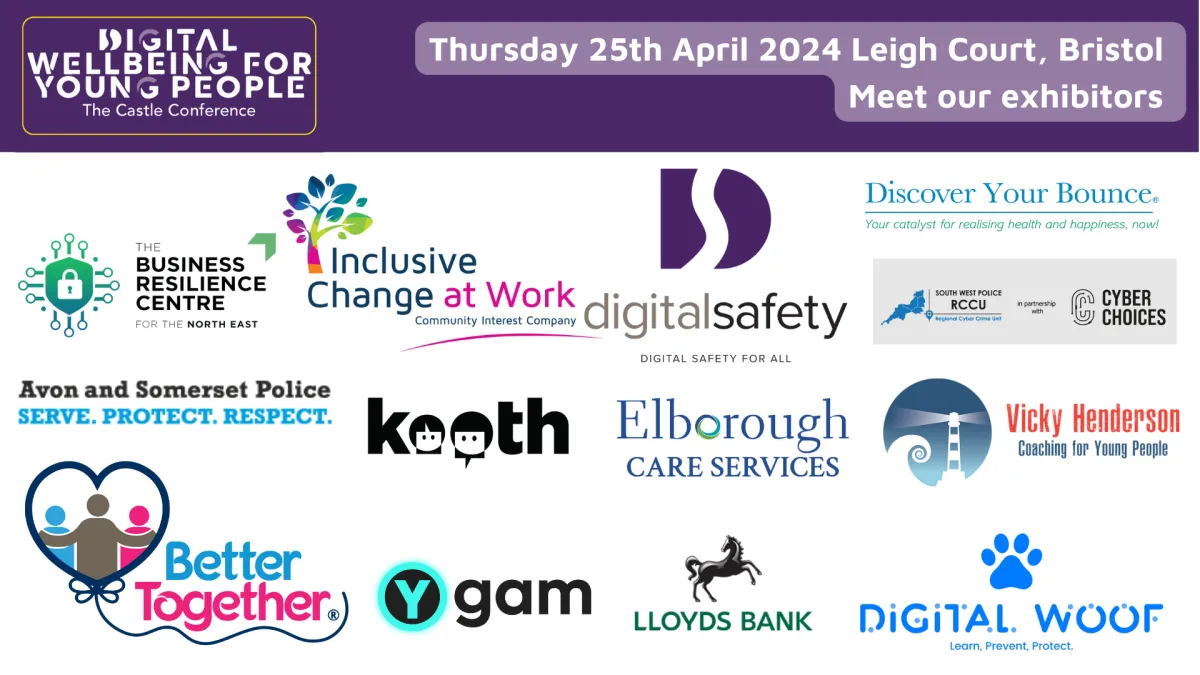
Exhibitor Information
We think you will agree that our exhibitors contributed so much to the event.
We know that we can tackle the problems we face alone - which is why we love working with others.
Thank you - you made the day INCREDIBLE!
Inclusive Change At Work CiC
Bradbury House
Wheatfield Road
Bradley Stoke
Bristol
BS32 9DB
Companies House: 13271923
ICO registration: ZZB293922
UK register of Learning providers
UKRLP: 10090653
Privacy Policy | Terms and Conditions
Copyright © 2024 Inclusive Change At Work CiC | All Rights Reserved
LinkedIn