Thank you for helping to
Keep the conversation going
Here are some ways we can help you.
We hope you enjoyed The Castle Conference: Digital Wellbeing for Young People.
We know you want to keep the conversation going so we have created a page to help you do that.
The page will be updated with slides and videos when they are available.
Digital Safety Training & Consultancy
Digital Safety can provide a range of training services and consultancy. From one cyber security for non-profits to training for parents in your community.

Inclusive Change Support and Training
Want to know more about neurodiversity in your community? We can help: from unlocking the potential in your teams to deepening awareness of safeguarding vulnerable people.
Watch the Castle Conference Catch Up
We hope that The Castle Conference inspired you, got you thinking and talking about the topic of Digital Wellbeing. We really hope you have been talking about the conference to your friends, family and colleagues.
We certainly are and we arranged it!
The Castle Conference Catch-Up was a chance to keep talking, a chance to share your thoughts, a chance to find out what questions we have been asked since the day and a chance to ask us new questions.
Andy & Lucy
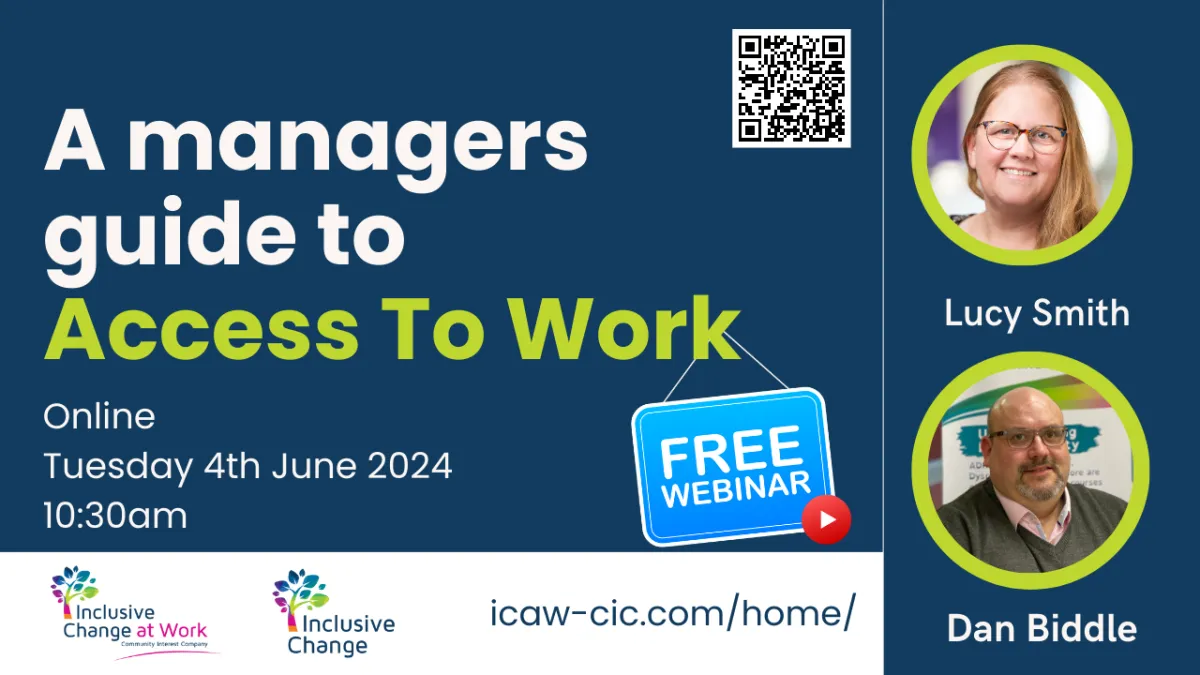
4th June 2024
Free Webinar
Join Lucy & Dan from Inclusive Change At Work CIC who will be discussing how to support disabled and neurodivergent employees to thrive at work.
Recap from the event
We have combined the slides into a video for you to rewatch
This is only the slides - no audio. Videos will be uploaded soon.
Speaker Videos
We will be uploading videos from The Castle Conference as soon as they are available.
COMING SOON!
Resources
Links and downloads for you
Watch or listen online to our podcasts

Spotify Podcast
Listen to our speakers and exhibitors
Is ADHD Becoming More Common, or Are We Finally Paying Attention?
Is ADHD Becoming More Common, or Are We Finally Paying Attention?
July 24, 2026
This week I was delivering a workplace neurodiversity session. As I often do, I used Slido for the questions at the end. People can ask anonymously, which usually means we get the questions they genuinely want answered rather than the ones they feel comfortable asking in front of their colleagues.
One question appeared: "Do you think neurodiversity is becoming more common?"
A little later, another followed: "Are smartphones and social media causing ADHD?"
Good questions. And ones I am hearing more often.
ADHD appears to be everywhere. More adults are talking about being diagnosed. More women are recognising themselves in descriptions that were historically based largely on the experiences of boys. Waiting lists for assessment have grown. Social media feeds are full of ADHD content.
So it makes sense that people wonder whether ADHD itself is becoming more common. The evidence tells a more complicated story.
More diagnoses do not automatically mean more ADHD
ADHD is a neurodevelopmental condition involving persistent patterns of inattention, hyperactivity and/or impulsivity that interfere with someone's life. Its origins lie in development, and twin and family studies put its heritability at somewhere between 70 and 90 percent. It is not something a person suddenly acquires because they have watched too many short videos.
There has undoubtedly been a substantial increase in recognition, referrals, diagnoses and treatment. That does not necessarily mean the underlying prevalence of ADHD has risen at the same rate.
A major review of research spanning three decades found no clear evidence of an increase in the number of children meeting ADHD criteria when studies used consistent diagnostic methods. More recent reviews looking at data through to 2023 have reached a similar conclusion: no significant time trend in underlying prevalence, alongside a clear rise in diagnostic activity. That is not the final word. The research in this area has real gaps, and not every study agrees, so I would not tell you the science has settled the question for good.
What I will say is that two sweeping claims are both wrong. It would be wrong to say the increase in diagnoses is imaginary, or that people are being casually overdiagnosed. It would also be too simplistic to assume that a rise in diagnoses proves modern life is creating ADHD.
What has clearly changed is our ability and willingness to recognise it. Adults who struggled throughout school and employment without understanding why are now finding an explanation. Women and girls, whose ADHD often does not resemble the disruptive-little-boy stereotype, are more likely to be identified. Greater public awareness and less stigma are letting people ask questions they might once have kept to themselves.
Many of these people are not developing ADHD now. They are finally being seen now.
Do smartphones cause ADHD?
No. Based on the evidence currently available, we cannot say smartphones cause ADHD. That distinction matters.
Researchers have found associations between ADHD symptoms and problematic smartphone or digital media use. But an association does not tell you which came first, or whether one caused the other. Some longitudinal research finds this relationship weak. Other studies suggest the arrow points the other way: people already experiencing ADHD traits may be more vulnerable to problematic phone use, not the reverse.
That makes intuitive sense. A device offering novelty, instant feedback, endless scrolling and constant stimulation is likely to be especially compelling to a brain that is already wired to chase interest, urgency and reward. But saying people with ADHD may find certain technologies harder to regulate is not the same as saying those technologies created their ADHD.
Phones may not cause ADHD, but they still affect attention
We should not let the absence of evidence for causation become a defence of our digital environment. Smartphones may not create a neurodevelopmental condition, but they can interrupt concentration, displace sleep and make sustained attention harder for everyone.
Notifications train us to switch tasks. Emails, messages and platforms create a constant hum of expected availability. Social media offers a near-endless supply of novelty. Plenty of workplaces now expect people to move repeatedly between meetings, messages, documents and systems while somehow still producing thoughtful work.
That affects people with ADHD. It also affects people without it. Smartphones probably have not made everyone neurodivergent. What they may have done is build environments that expose the limits of human attention more often, and more visibly.
This is where it gets relevant to work. We often describe employees as distracted, disorganised or lacking focus without examining the conditions we are asking them to perform in. How many channels are they expected to monitor at once? How often is their work interrupted? Do they get any protected time to actually think? Are they judged on the speed of their reply rather than the quality of their thinking? And are managers modelling healthy digital boundaries, or firing off messages at 9pm and expecting an answer by 9:05?
These are not just questions about ADHD. They are questions about how we design work, and they sit with leaders and organisations, not with individual willpower.
Social media has helped, and it has caused harm
Social media has played a genuinely mixed role in rising ADHD awareness. For some people, hearing someone else describe their experience is the first clue that their own lifelong difficulties might have a name. It has reduced shame, built communities and pushed people towards proper assessment. That matters.
But social media is not a diagnostic tool. One widely cited study of the most popular ADHD videos on TikTok found that just over half contained misleading information, most of it posted by people with no clinical background. A short video might get someone asking the right questions. It cannot tell them whether their experience is persistent, whether it began in childhood, whether it shows up across different areas of life, or whether it is better explained by anxiety, trauma, stress, sleep deprivation, another condition entirely, or some combination of the above.
Recognition can start online. Diagnosis needs a proper assessment.
Maybe we are asking the wrong question
Instead of asking only whether smartphones are causing ADHD, try: what is modern life doing to human attention, full stop?
Instead of asking whether neurodiversity has suddenly become more common, try: who was previously overlooked, misunderstood, or expected to struggle in silence?
And in our organisations, instead of asking why people cannot concentrate, try: have we actually built a working environment where concentration is possible?
ADHD is not caused by laziness, poor parenting, a lack of discipline or owning a smartphone. But the environment around a person can reduce the barriers they face, or pile more on top. That is where leaders have real influence, and real responsibility.
None of us can remove every notification, deadline or distraction. We can set clearer expectations, protect thinking time, cut unnecessary context switching, and give people more control over how they get their work done. That is a design choice, not a favour.
ADHD probably is not suddenly everywhere. The conversation about it is. And after generations of people being missed, misunderstood or told to try harder, I think that counts as progress, not a problem.
If this raised questions for your own team, that is exactly what our workplace neurodiversity sessions are for, and it is worth continuing the conversation rather than leaving it here.
Lucy Smith
Award winning entrepreneur • Author, Anchoring Change in the Age of AI • Future of Work Change Architect • AI Risk Governance • Crisis Simulation • Keynote • Speaker • Founder Inclusive Change • Co-Founder Decid:R


Get Your FREE eBook
A Practical guide to Simplify your Digital Life
Digital Safety CIC - Online Resources
Exhibitor Information
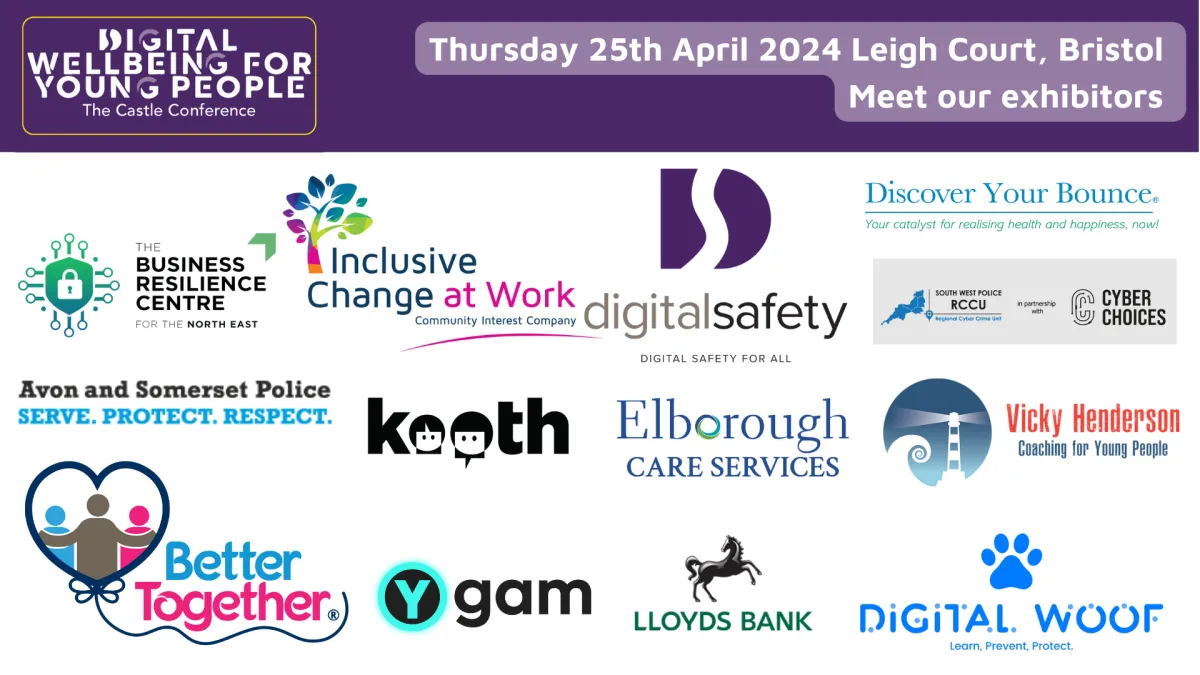
We think you will agree that our exhibitors contributed so much to the event.
We know that we can tackle the problems we face alone - which is why we love working with others.
Thank you - you made the day INCREDIBLE!
Inclusive Change At Work CiC
Bradbury House
Wheatfield Road
Bradley Stoke
Bristol
BS32 9DB
Companies House: 13271923
ICO registration: ZZB293922
UK register of Learning providers
UKRLP: 10090653
Privacy Policy | Terms and Conditions
Copyright © 2024 Inclusive Change At Work CiC | All Rights Reserved
LinkedIn