
Thank you for helping to
Keep the conversation going
Here are some ways we can help you.
We hope you enjoyed The Castle Conference: Digital Wellbeing for Young People.
We know you want to keep the conversation going so we have created a page to help you do that.
The page will be updated with slides and videos when they are available.
Digital Safety Training & Consultancy
Digital Safety can provide a range of training services and consultancy. From one cyber security for non-profits to training for parents in your community.

Inclusive Change Support and Training
Want to know more about neurodiversity in your community? We can help: from unlocking the potential in your teams to deepening awareness of safeguarding vulnerable people.
Watch the Castle Conference Catch Up
We hope that The Castle Conference inspired you, got you thinking and talking about the topic of Digital Wellbeing. We really hope you have been talking about the conference to your friends, family and colleagues.
We certainly are and we arranged it!
The Castle Conference Catch-Up was a chance to keep talking, a chance to share your thoughts, a chance to find out what questions we have been asked since the day and a chance to ask us new questions.
Andy & Lucy
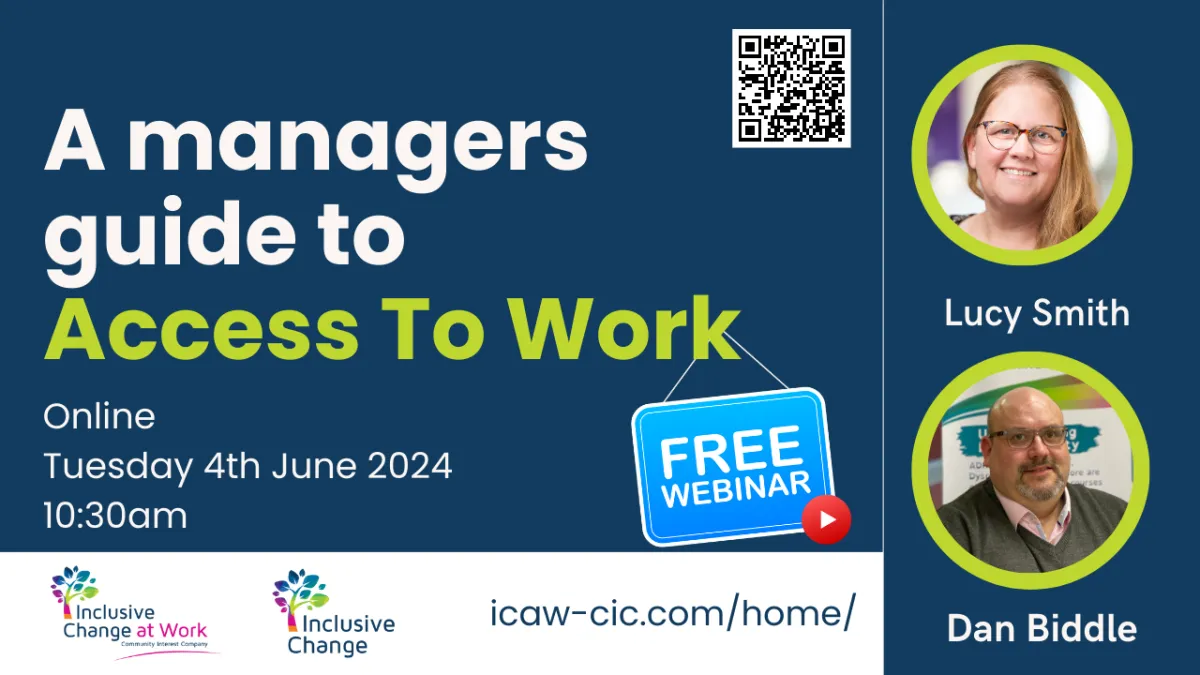
4th June 2024
Free Webinar
Join Lucy & Dan from Inclusive Change At Work CIC who will be discussing how to support disabled and neurodivergent employees to thrive at work.
Recap from the event
We have combined the slides into a video for you to rewatch
This is only the slides - no audio. Videos will be uploaded soon.
Speaker Videos
We will be uploading videos from The Castle Conference as soon as they are available.
COMING SOON!
Resources
Links and downloads for you
Watch or listen online to our podcasts

Spotify Podcast
Listen to our speakers and exhibitors
Decision Making - Who gets heard
Who Gets Heard in the Room? Personality Types, Decision Making, and What Leaders Can Do About It
By Lucy Smith, Founder, Inclusive Change
There is a moment in almost every high-stakes meeting where the decision gets made and it is rarely the moment anyone planned.
It is not when the data is presented. It is not when the options are laid out. It is when someone with enough authority and enough confidence says, out loud, what they think should happen - and the room goes quiet.
That moment is not a decision. It is a performance of one. And the difference between those two things is costing organisations more than most leaders realise.
The room is not neutral
Every decision made in a group setting is shaped by who is in the room, how they communicate, what they believe about their own authority to speak, and what they have learned - consciously or not - about whose voice gets taken seriously.
That is not a radical idea. But most organisations behave as though it is not true. They design decision making processes around the assumption that the best information will surface naturally, that the strongest argument will win, and that good leadership means having the answer.
None of those assumptions hold under scrutiny.
What actually happens is this. The most verbally confident person speaks first and sets the frame. Others calibrate their contributions to that frame. The quieter, more deliberate thinkers are either still processing or have already decided it is not worth the effort of being heard. And the decision that gets made reflects the thinking of a subset of the room - usually the loudest, most senior, or most politically safe subset.
This is not a personality problem. It is a process problem. And it is one that every leader has the power to change.
What personality frameworks tell us
There are dozens of personality and cognitive style frameworks in use across organisations - Myers-Briggs, DISC, Belbin, Big Five, Enneagram, Hogan. They vary considerably in their scientific robustness and their practical usefulness.
What most of them agree on, and what the research broadly supports, is that people differ meaningfully in how they process information, how they communicate under pressure, and how they relate to authority and hierarchy in group settings.
A few dimensions matter particularly in decision making contexts.
Introversion and extraversion. This is not about shyness. It is about where people do their best thinking. Extraverts tend to think out loud - the meeting is where they process. Introverts tend to arrive at a meeting having already thought it through, and find it harder to get their conclusions into the room in real time. Decision making processes that reward quick verbal contributions systematically disadvantage introverted thinkers - and often lose their best analysis as a result.
Risk tolerance and loss aversion. Some people instinctively weight the downside of a decision more heavily than the upside. Others are drawn to opportunity and underweight risk. Neither orientation is wrong - both are necessary in a well-functioning team. But when one orientation dominates the room, decisions become systematically skewed. A leadership team of high-risk-tolerance extraverts will consistently underprice the downside. A team of loss-averse, cautious thinkers may fail to act when action is needed.
Relationship to authority. Some people find it natural to challenge the most senior person in the room. Others find it deeply uncomfortable, regardless of whether they believe the senior person is wrong. This is shaped by personality, by culture, by organisational history, and by lived experience of what happens to people who speak up. In a crisis - when the stakes are highest and the time is shortest - the people most likely to stay silent are often the ones most likely to have seen something important.
Processing style. Some people need time. They want to sit with a problem, run scenarios, consider the edges before they commit. Others are energised by a fast-moving discussion and reach conclusions quickly. In a standard meeting format, the fast processors will always dominate. The slower, deeper processors will be presenting their thinking to an audience that has already moved on.
What this looks like in practice
Let me be specific, because this is where it becomes real.
A leadership team is dealing with a significant operational incident. The meeting has been called at short notice. The most senior person in the room opens by summarising the situation and immediately asks: what do we do?
Three people speak within the first two minutes. They are all confident, all senior, all proposing a course of action. The room begins to coalesce around one option. It is not necessarily the best option. It is the option that was named first, by the person with the most authority, with the most verbal confidence.
Elsewhere in the room, two or three people are still thinking. One of them has already identified a constraint that rules out the preferred option entirely - but has not yet found the moment to say so. Another has a question about the reliability of the information they have been given - but the conversation has moved too fast for the question to feel appropriate. A third has done this before, in a different context, and knows how it ends - but is not sure their experience is relevant here, and does not want to slow things down.
The decision gets made. It turns out to be wrong. In the debrief, the people who stayed silent describe what they were thinking. It was exactly what was needed.
This is not a hypothetical. It is a description of what happens in organisations every day.
The leader's role
If you lead a team, this is your problem to solve. Not theirs.
It is not the responsibility of the quiet thinker to become more vocal. It is not the responsibility of the cautious analyst to match the pace of the verbal processor. It is your responsibility - as the person who shapes the conditions of the room - to design a process that gets the best thinking out of everyone in it.
That means a few things practically.
Slow the room down before you speed it up. Before discussion opens, give people a moment to write down their initial read of the situation. Two minutes of individual reflection before group discussion changes the quality of what follows dramatically. It gives processing time to the people who need it, and it surfaces perspectives that would otherwise never make it into the conversation.
Separate information gathering from decision making. These are two different cognitive tasks, and they should not happen simultaneously. First, get everything on the table - what do we know, what are we uncertain about, what are we missing. Only then move to options and judgement. Mixing the two means decisions get made before the picture is complete.
Name the quiet people. Not in a way that puts them on the spot, but in a way that signals their contribution matters. "Before we move on, I want to make sure I have heard from everyone. What is your read on this?" is not a difficult sentence. It is one of the most powerful things a leader can say in a room.
Separate rank from contribution. The most senior person in the room should often speak last, not first. When leaders open with their view, they anchor the room. When they hold their view until others have contributed, they get more honest input and better decisions.
Build in a red team. Designate someone - ideally someone whose natural instinct is caution or challenge - to argue against the preferred option before the decision is made. This is not negativity. It is discipline. The best decisions survive being challenged. The worst ones need everyone to agree in order to survive at all.
The cost of getting this wrong
The research on groupthink is unambiguous. When teams prioritise cohesion over critical thinking - when the pressure to agree overrides the instinct to challenge - they make systematically worse decisions. Not occasionally. Consistently.
The decisions most likely to fail are the ones that felt most confident in the room. The ones where nobody pushed back. The ones where the leader's preference became the group's conclusion before the alternatives had been properly considered.
And the decisions most likely to succeed are the ones where the quietest person in the room was genuinely heard.
What Decid:R is built around
This is one of the reasons I built Decid:R.
The CLEAR framework at the heart of every DecidR session is specifically designed to create the conditions for better group decision making - not by changing the people in the room, but by changing the process they use. It structures how information is gathered, how risk is assessed, how options are generated, and how decisions are reviewed, in a way that does not reward verbal confidence over analytical depth.
Every Decid:R simulation also produces a decision trace - a record of who contributed what, when, and how the group moved through the problem. That trace is one of the most revealing things a leadership team can look at together.
Because the gap between what people were thinking and what actually made it into the decision is, in most organisations, enormous.
Closing that gap is leadership work. And it starts with understanding who is actually in your room - and whether your process is designed to hear them.
Lucy Smith is the founder of Inclusive Change and the creator of Decid:R - a decision making simulation platform powered by Inclusive Change. She works with leadership teams on decision making, change management, and building organisations where every voice contributes.


Get Your FREE eBook
A Practical guide to Simplify your Digital Life
Digital Safety CIC - Online Resources
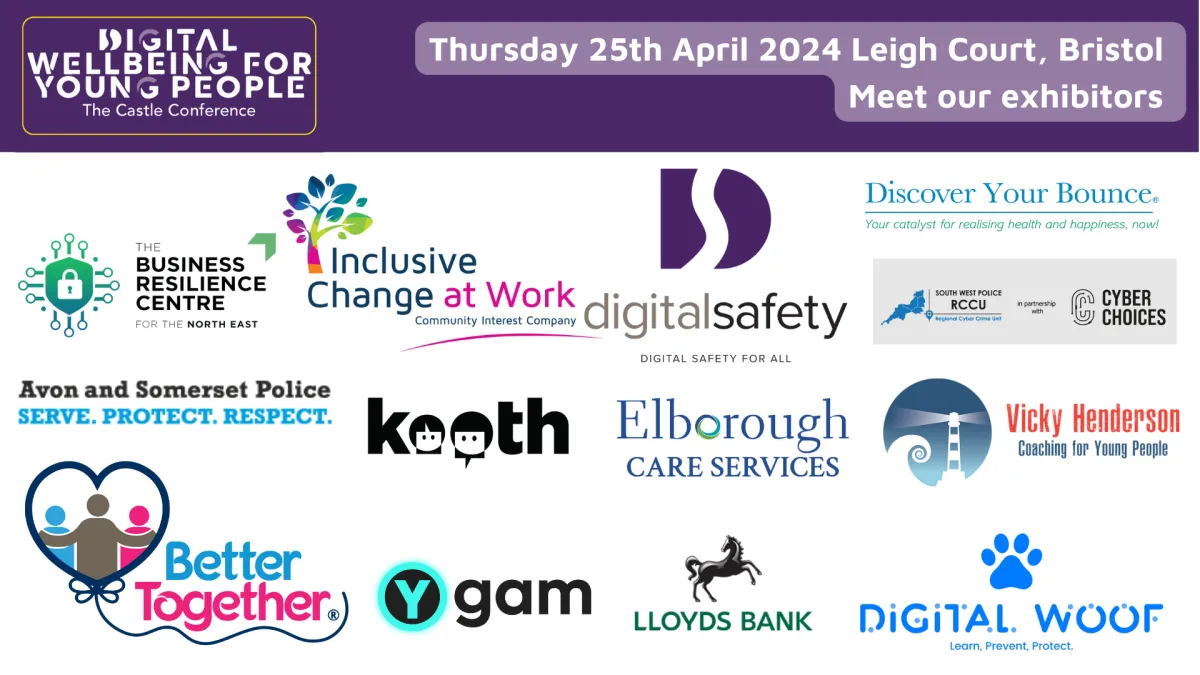
Exhibitor Information
We think you will agree that our exhibitors contributed so much to the event.
We know that we can tackle the problems we face alone - which is why we love working with others.
Thank you - you made the day INCREDIBLE!
Inclusive Change At Work CiC
Bradbury House
Wheatfield Road
Bradley Stoke
Bristol
BS32 9DB
Companies House: 13271923
ICO registration: ZZB293922
UK register of Learning providers
UKRLP: 10090653
Privacy Policy | Terms and Conditions
Copyright © 2024 Inclusive Change At Work CiC | All Rights Reserved
LinkedIn